Business License
Electrical Hardware Stamping Components: A Buyer’s Guide
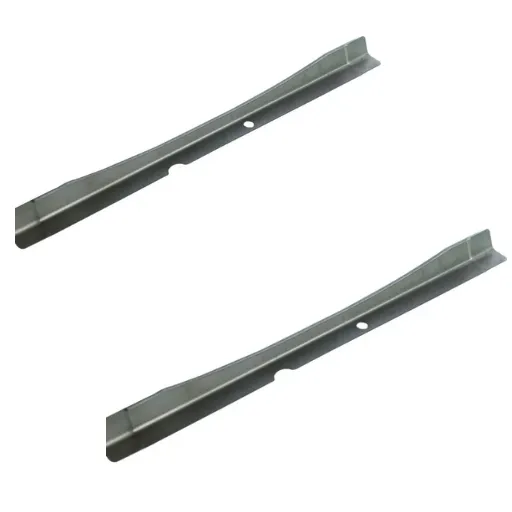
Electrical hardware stamping components are precision metal parts made from sheet metal or strip material. They include terminals, busbars, contacts, connectors, and brackets used in electrical and electronic devices.
A small tolerance error or wrong material finish can cause heat buildup, field failure, or costly assembly rejects. This guide explains how these parts are made, what materials work best, and how to choose a supplier that can scale with your program.
If you source stamped electrical parts for automotive, industrial, or consumer electronics, the sections below will help you evaluate suppliers and designs with confidence.
Key Takeaways
These parts include terminals, busbars, contacts, shields, and brackets. Copper and brass are the most common conductive materials.
Progressive die stamping produces tight-tolerance parts in one continuous press run. It is ideal for medium-to-high volumes.
Conductivity, plating, edge break, and flatness directly affect electrical performance and assembly fit.
A supplier with in-house mold design shortens lead time and protects design intent.
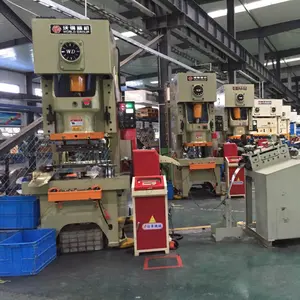
Cangzhou Honglang runs 100+ stamping machines across a 10,000 m² facility for custom electrical hardware stamping components.
What Are Electrical Hardware Stamping Components?
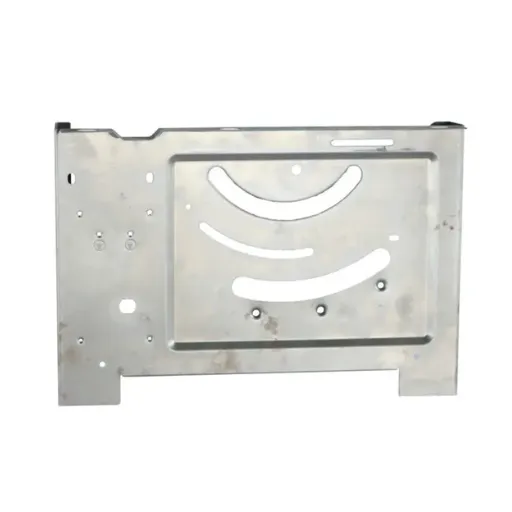
These parts carry current, make contact, or support electrical assemblies. They are produced from coil or strip stock on mechanical or high-speed stamping presses.
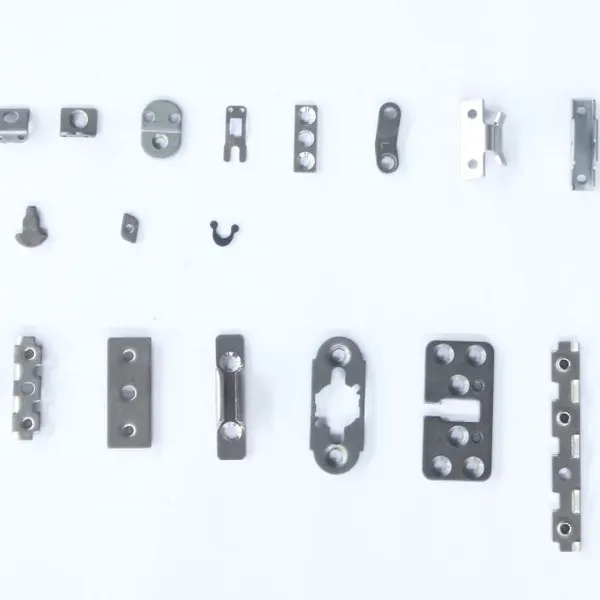
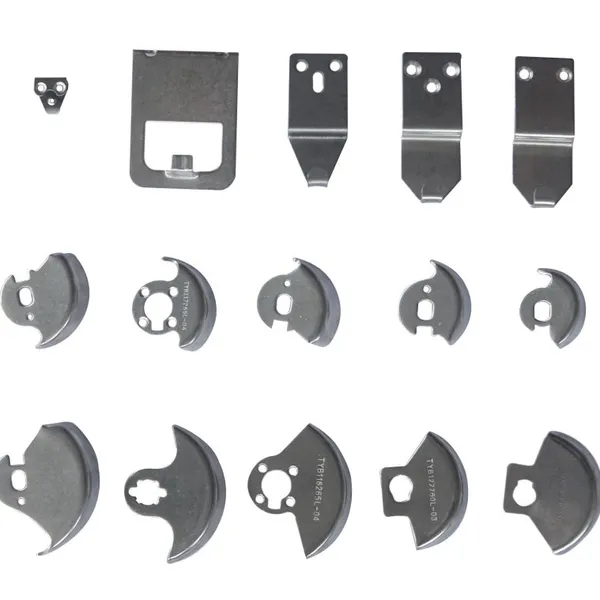
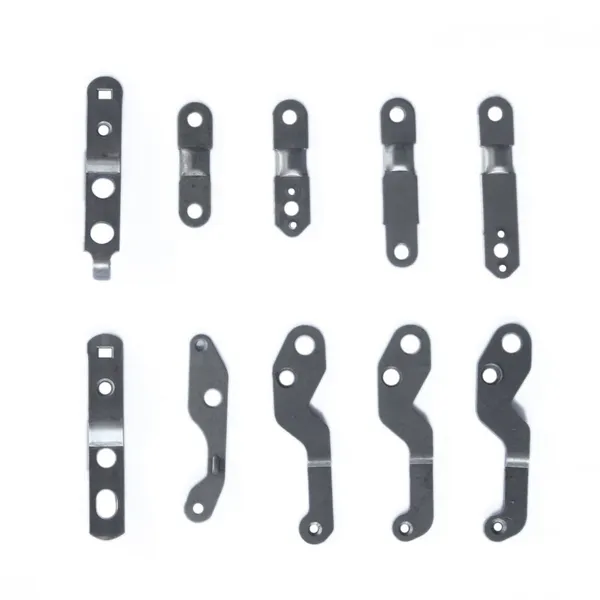
Common electrical hardware stamping components include:
Stamped terminals and terminal connectors
Busbars and distribution bars
Electrical contacts and contact springs
Shielding and grounding clips
Battery tabs and fuse clips
Lead frames and pins for connectors
Brackets and mounting hardware for electrical assemblies
Each part plays a functional role. Terminals and busbars must conduct electricity efficiently. Contacts must resist wear and maintain spring force. Shields must block electromagnetic interference while fitting into dense assemblies.
These parts often operate under load, thermal cycling, or vibration. Material, geometry, and finish must be engineered together. A partner that understands electrical applications can help you avoid costly redesigns later.
How Electrical Hardware Stamping Components Are Made
Production follows a clear path from drawing to finished part. At Cangzhou Honglang, this workflow is managed in-house. It covers process analysis, mold design, stamping production, and secondary operations.
Process Analysis and DFM Review
The first step is a design-for-manufacturability (DFM) review. The engineering team studies the drawing, material, and volume. We check bend radius, hole-to-edge distance, slot width, and wall height. We also flag issues such as springback, thinning, or die wear.
Mold Design and Manufacturing
Once the design is validated, a progressive or compound die is designed. For high-volume electrical parts, progressive die stamping is preferred. It feeds the strip through multiple stations. Each station performs one operation, such as blanking, piercing, bending, or coining. The part stays attached to the carrier strip until the final station separates it.
In-house mold manufacturing gives direct control over tool steel selection, heat treatment, machining accuracy, and tryout timing. This is especially important for electrical components, where tiny punch-to-die clearances determine edge quality and burr height.
Stamping Production and In-Process Control
Parts are run on mechanical or high-speed presses. Speed is matched to part complexity and material. During the run, operators do dimensional checks, burr inspections, and visual audits. For critical components, we provide first-article inspection reports, material certificates, and lot traceability.
Secondary Finishing and Assembly
Many electrical components need plating, coating, passivation, or heat treatment. These finish steps meet conductivity, solderability, or corrosion targets. Optional secondary operations include welding, assembly, and mechanical processing. A supplier that offers these under one roof simplifies logistics and reduces handling damage.
Mini-story: When a solar inverter manufacturer switched to Cangzhou Honglang for stamped busbars, their previous supplier had outsourced tooling. Each drawing revision took 12 days to flow through the external die shop. After moving to our in-house mold team, engineering changes reached the press floor within 48 hours. That speed helped them cut three weeks off their product-qualification schedule.
Materials Used for Electrical Hardware Stamping Components
Material selection is a critical engineering decision. The metal must conduct electricity or provide shielding. It must also form without cracking and accept the required plating or finish.
Copper and Copper Alloys
Copper is the standard for high-conductivity parts. Common grades include:
C11000 (ETP copper): excellent conductivity, used for busbars and connectors
C10200 (oxygen-free copper): high conductivity for sensitive electronics
C18080 and C19210: stronger alloys for spring contacts
Pure copper is soft and forms easily. It can gall, so lubrication or protective plating may be needed.
Brass Alloys
Brass, an alloy of copper and zinc, offers better strength and machinability than pure copper. C26000 (cartridge brass) is widely used for terminals, connectors, and decorative or decorative-functional electrical parts. Brass also accepts nickel, tin, and silver plating well.
Steel and Stainless Steel
Steel stampings are used where mechanical strength and lower material cost matter more than conductivity. Galvanized steel is common for brackets, housings, and shields. Stainless steel adds corrosion resistance for outdoor electrical hardware and renewable-energy applications.
Aluminum
Aluminum is lightweight and resists corrosion, but it has lower conductivity than copper. It is sometimes used for enclosures, heat sinks, and weight-sensitive brackets. Proper plating or anodizing is usually needed for reliable electrical contact surfaces.
Plating and Surface Finishes
Plating protects the base metal and improves performance:
Tin plating: improves solderability and corrosion resistance for terminals
Nickel plating: provides wear resistance and a diffusion barrier
Silver plating: highest conductivity for high-current contacts
Gold plating: reliable low-resistance contacts for connectors
Passivation and antioxidants: protect copper from discoloration and oxidation
The right material and finish depend on current load, temperature, environment, and assembly method. Our engineers can help you select and validate the best combination.
Design Considerations for Electrical Hardware Stamping Components
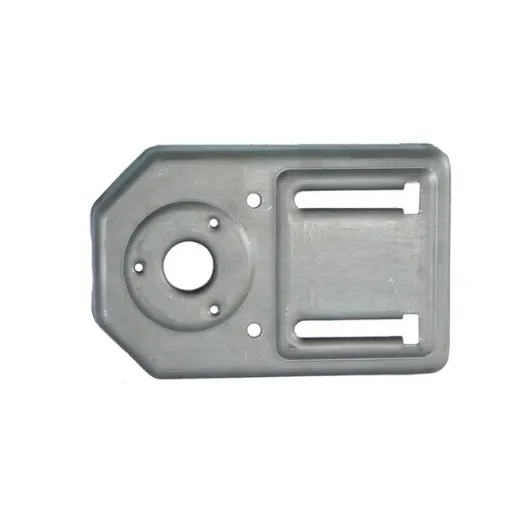
Good design for electrical stamping goes beyond dimensions on a drawing. It must balance electrical performance, mechanical reliability, manufacturability, and cost.
Tolerance and Fit
Electrical assemblies are often dense. If a terminal leg is even a few tenths of a millimeter off, it may not fit the housing or PCB. Common tolerances range from ±0.05 mm to ±0.10 mm. High-density connector features may need tighter control.
Burr and Edge Quality
Burr left on a stamped edge can create shorts, interference, or poor contact. Progressive dies with proper punch-to-die clearance, sharp tooling, and secondary deburring keep burr within spec. For high-voltage parts, edge break and radius may also matter to prevent corona discharge.
Flatness and Springback
After forming, thin conductive parts can spring back or distort. Harder materials and acute bends increase springback. Engineers account for this during die design, often adding coining or overbending operations to hold the final geometry.
Thermal and Electrical Performance
Cross-section, contact area, and material conductivity determine current capacity. Stamped busbars must be sized for continuous and peak loads. Mounting points and terminal lugs also affect sizing.
Assembly Integration
Electrical components rarely stand alone. They must fit with molded housings, screws, solder paste, or welding processes. Design features such as barbs, locking tabs, and pre-plated solder tails make assembly faster and more reliable.
Choosing a supplier early pays off. At Cangzhou Honglang, we offer engineering support and DFM feedback. We help customers optimize parts for both function and production economics.
Applications of Electrical Hardware Stamping Components
Electrical hardware stamping components are used across nearly every industry where electricity flows. Each sector has its own performance, certification, and documentation requirements.
Automotive Electronics
Modern vehicles contain dozens of electronic control units, sensors, power modules, and charging systems. Stamped terminals, pins, busbars, and contacts connect these subsystems. Automotive suppliers demand RoHS- and REACH-compliant materials, PPAP documentation, and stable lot-to-lot quality.
Industrial Controls and Circuit Protection
Circuit breakers, contactors, relays, and switchgear rely on stamped contacts, springs, and busbars. These parts must resist arcing, wear, and oxidation under repeated electrical cycles.
Consumer Electronics and Appliances
Smartphones, laptops, power adapters, and home appliances use small stamped shields, contacts, terminals, and battery clips. These parts require tight tolerances, clean edges, and cosmetic plating.
Renewable Energy and Power Supply
Solar inverters, wind-power systems, power supplies, and energy storage systems use high-current busbars, lugs, and connector hardware. These components must handle high amperage, resist corrosion, and survive temperature swings over long service life.
Telecommunications and Data Centers
Servers, routers, and telecom equipment need reliable contacts, grounding clips, and shielding. Consistency across millions of parts is essential. Any out-of-spec contact can cause signal loss or field returns.
Cangzhou Honglang supplies electrical hardware stamping components to automotive, electronics, power supply, wind power, and telecommunications customers, with nearly 1,000 product varieties in our experience base.
Common Quality Standards and Certifications
Quality standards depend on the end market. Buyers should confirm which standards apply. They should also verify that the supplier can document compliance.
ISO 9001: General quality management system certification
IATF 16949: Required for most automotive component suppliers
RoHS: Restriction of Hazardous Substances in electrical and electronic equipment
REACH: Regulation on Registration, Evaluation, Authorisation and Restriction of Chemicals
PPAP: Production Part Approval Process for automotive programs
UL listing: For some electrical hardware sold in North America
Material certificates: Lot traceability and composition reports for critical applications
A supplier should provide clear inspection reports, material certificates, and corrective-action processes. Ask for sample parts, dimensional reports, and plating thickness data before committing to mass production.
How to Choose a Supplier for Electrical Hardware Stamping Components
Supplier selection affects the success of your electrical assembly. Price matters. But precision, tooling control, capacity, and communication matter more over the life of the program.
In-House Tooling Capability
Tooling is the foundation of every stamped part. A supplier that designs and builds molds in-house can iterate faster, keep drawings confidential, and maintain tighter control over quality. Learn more about our in-house mold design and manufacturing capabilities.
Production Capacity and Equipment
Machine count and facility size indicate real capacity, not just promises. A supplier with 100+ stamping machines can support both prototype runs and high-volume orders without forcing you to switch sources as you scale.
Material and Process Range
The best partner can work with copper, brass, steel, stainless steel, and aluminum, plus offer plating, coating, welding, and assembly. One supplier for multiple component types reduces your vendor count and simplifies supply-chain management.
Quality Documentation
Ask for sample parts, inspection data, material certificates, and corrective-action records. A transparent quality process is a strong indicator of long-term reliability.
Engineering Access and Communication
Direct access to a technical contact reduces misunderstandings and speeds problem-solving. At Cangzhou Honglang, a team of 20 technical professionals supports quoting, tooling, and production.
For a broader look at sourcing, read our complete guide on how to choose a metal stamping supplier.
Why Cangzhou Honglang for Electrical Hardware Stamping Components
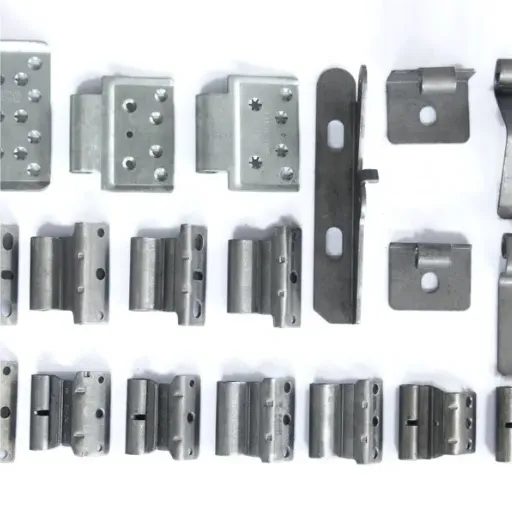
Cangzhou Honglang is a professional manufacturer of electrical hardware stamping components. We also produce sheet metal parts, welded parts, and mechanical processing parts. Our integrated model supports customers from process analysis and mold design through stamping production and finishing.
Our capabilities include:
100+ sets of stamping machinery across a 10,000 m² facility
In-house mold design and manufacturing
Materials including copper, brass, steel, stainless steel, and aluminum
Secondary operations: welding, sheet metal fabrication, mechanical processing, plating, and coating
Engineering team of 20 technical professionals
Experience supplying automotive, electronics, HVAC, furniture machinery, wind power, power supply, and telecommunications markets
Want to see how this works in practice? Explore our electrical hardware stamping components capabilities to learn more about terminals, busbars, contacts, and connector hardware.
Cost Drivers for Electrical Hardware Stamping Components
Understanding cost drivers helps buyers evaluate quotes fairly and design parts that are economical to produce.
Tooling Investment
The die is usually the largest upfront cost for precision stampings. A progressive die for a complex terminal may cost more than a simple blanking die. However, it can produce parts at high speed for years. In-house tooling capability can reduce die cost and lead time.
Material Selection
Copper and silver-plated materials cost more than steel, but they may be required for conductivity. Material thickness also affects cost, both in raw material usage and in press tonnage required.
Part Complexity
More forming operations, tighter tolerances, smaller radii, and secondary processes increase cost. Designers can often simplify parts without losing function. Options include increasing bend radii, standardizing hole sizes, or eliminating unnecessary slots.
Volume
Higher volumes reduce per-part cost because tooling and setup costs are spread across more pieces. Low-volume or prototype runs may use softer tooling or shared dies to reduce upfront investment.
Finishing and Inspection
Plating, coating, heat treatment, and detailed inspection reports add cost but are often non-negotiable for electrical performance. Be clear about specification requirements so the supplier can quote accurately.
Mini-story: An electronics buyer named Lei asked three suppliers to quote a brass terminal for a power adapter. Two quotes omitted tooling separately and buried it in a higher unit price. Cangzhou Honglang provided a transparent breakdown: die cost, sample cost, unit price at 50,000 and 500,000 pieces, and plating-spec options. That clarity let Lei forecast the total cost of ownership across the product lifecycle and win internal approval for the project.
FAQ: Electrical Hardware Stamping Components
What are electrical hardware stamping components?
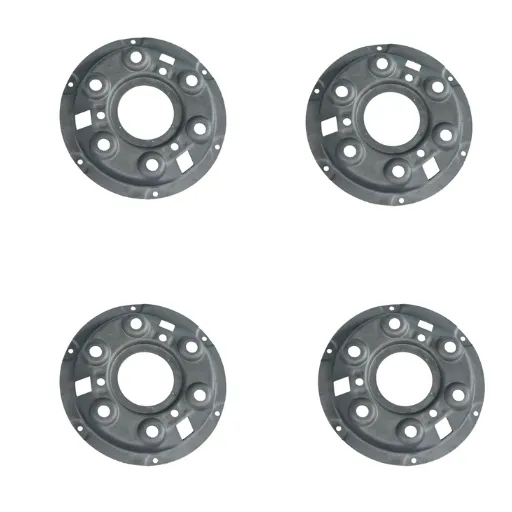
Electrical hardware stamping components are precision metal parts produced by stamping processes. They include terminals, busbars, contacts, clips, shields, and brackets used in electrical and electronic assemblies.
What materials are best for electrical stampings?
Copper and brass are preferred for conductivity. Steel and stainless steel are used for strength and shielding. Aluminum is used for lightweight housings and brackets. The right choice depends on current load, environment, and finish requirements.
What tolerances can electrical stamping components hold?
Typical precision electrical stamping components hold tolerances from ±0.05 mm to ±0.10 mm. Tighter tolerances are possible for connector and contact applications, depending on material and part geometry.
How are stamped electrical terminals made?
A coil of metal strip is fed through a progressive die. Each die station performs an operation such as blanking, piercing, bending, or coining. The final station separates the finished terminals from the carrier strip.
Does Cangzhou Honglang provide samples before mass production?
Yes. We typically produce sample parts for customer approval before committing to full production. This ensures dimensions, material, plating, and function meet your requirements.
What industries does Cangzhou Honglang supply with electrical hardware stamping components?
We supply automotive, electronics, HVAC, furniture machinery, wind power, power supply, and telecommunications markets, with experience across nearly 1,000 product varieties.
Conclusion
Electrical hardware stamping components may be small. But they carry large responsibility. The right mix of material, design, tooling, and supplier controls determines whether your product performs reliably in the field or returns with contact failures.
Key takeaways to remember:
Choose materials for conductivity, strength, and finish compatibility
Use progressive die stamping for tight-tolerance, high-volume parts
Partner with a supplier that controls mold design and manufacturing in-house
Request samples, inspection data, and material certificates before mass production
Think beyond unit price to total cost of ownership and supplier scalability
Ready to move your electrical hardware stamping components from drawing to production? Request a quote from Cangzhou Honglang. Our engineering team will provide a free DFM review, transparent tooling breakdown, and sample plan. Let us help you build better electrical assemblies with precision, quality, and scale.
Recently Posted
-
Metal Stamping Design Guidelines: 7 Rules for Better Parts
August 4, 2026Good metal stamping design guidelines start with matching the part geometry to the right process, material, and tolerance expectat Read More
 -
Stamped Electrical Terminals: A Complete Guide to Materials, Tolerances, and Sourcing
August 4, 2026Stamped electrical terminals are precision-formed metal components that create reliable electrical connections in automotive, elec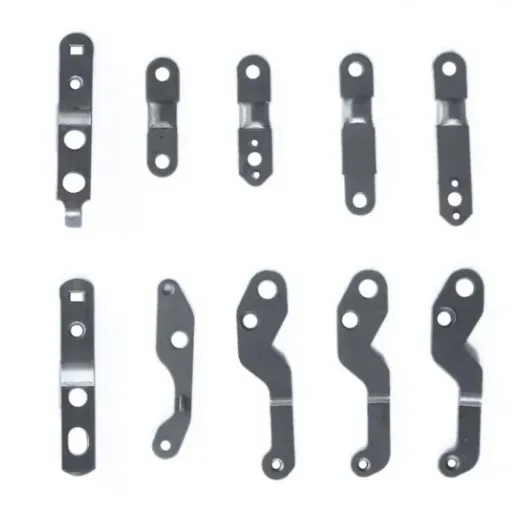 Read More
 -
Sheet Metal Prototyping Services: A Complete Guide for Product Development
August 3, 2026Sheet metal prototyping services help engineers and product teams validate designs, test fit and function, and refine manufacturin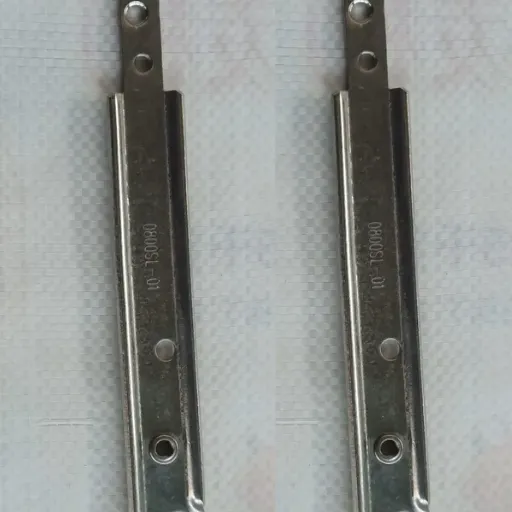 Read More
 -
Precision Sheet Metal Fabrication: An Engineering Guide to Tight-Tolerance Parts
August 3, 2026Precision sheet metal fabrication is the production of sheet metal parts held to tight dimensional tolerances, typically through c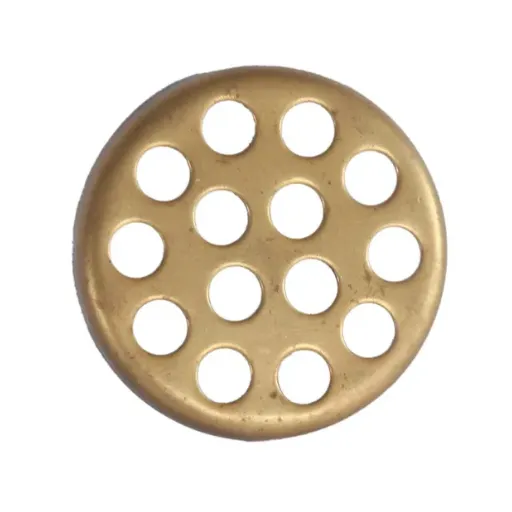 Read More

Contact Us
Recommended Products
-
 Custom Sheet Metal Fabrication: Laser Cutting, Stamping, Bending & Assembly ServicesNegotiableMOQ: 1 Piece
 -
Custom Precision Stainless Steel Metal Stamping Parts for OEM ApplicationsNegotiableMOQ: 1 Piece
-
Custom Automotive Metal Stamping – Stator Rotor Contact Clips for ElectronicsNegotiableMOQ: 1 Piece
-
High-Strength Sheet Metal Stamping for Motorcycle and Automotive ApplicationsNegotiableMOQ: 1 Piece
-
Galvanized Steel Custom Metal Deep Drawing Components Outdoor Deep Drawn Equipment Protective HousingNegotiableMOQ: 1 Piece
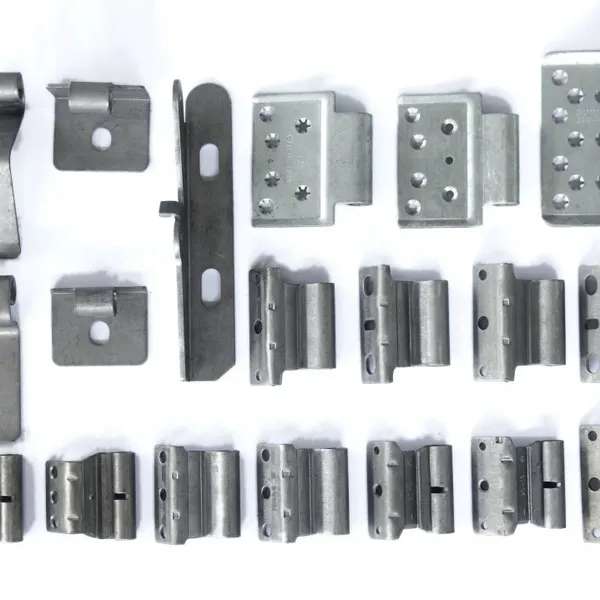
-
Professional Sheet Metal Stamping Process Service for Aluminum or Stainless SteelNegotiableMOQ: 1 Piece
-
Customized Stamping Parts for Furniture Auto Electrical Spring ContactsNegotiableMOQ: 1 Piece
-
Precision Custom Metal Deep Drawing Components Custom Sheet Metal Forming Fabrication ServiceNegotiableMOQ: 1 Piece
-
Custom Precision Deep Drawing Stamping Metal Components for IndustryNegotiableMOQ: 1 Piece
-
Stainless Steel Metal Stamping Components - Punching, Bending, Welding ServicesNegotiableMOQ: 1 Piece
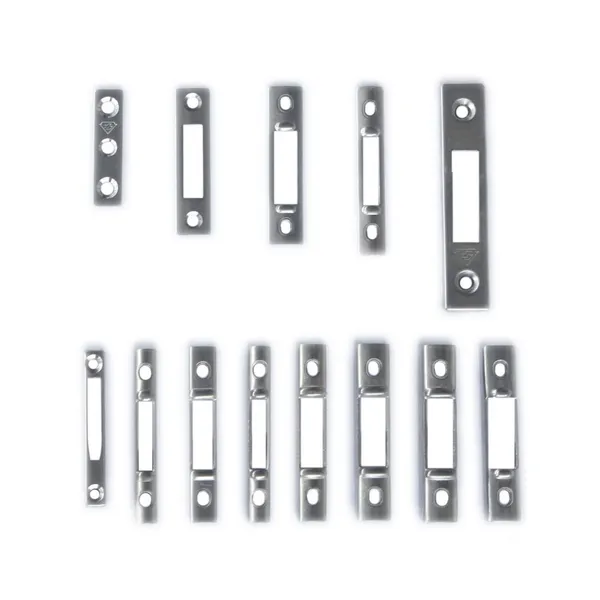
-
Custom Deep Drawing Metal Stamping Components for Factory Construction MachineryNegotiableMOQ: 1 Piece
-
Ra0.4 Surface Roughness Metal Stamping Parts for Automotive Brackets PrecisionNegotiableMOQ: 1 Piece
-
Custom Stamping Parts Stamped Welded Deep Drawn Sheet Metal Fabrication ComponentsNegotiableMOQ: 1 Piece
-
Custom Stainless Steel Flat Leaf Spring – Metal Stamping PartsNegotiableMOQ: 1 Piece
-
Custom Sheet Metal Stamping Parts With Bending, Laser Cutting & Fabrication ServicesNegotiableMOQ: 1 Piece
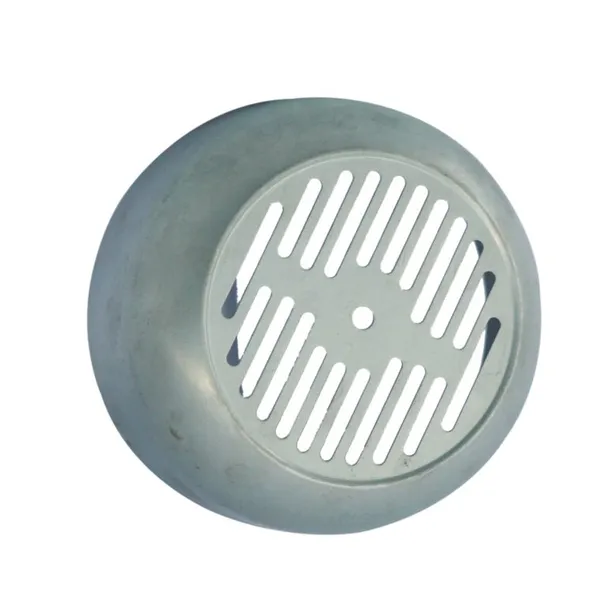
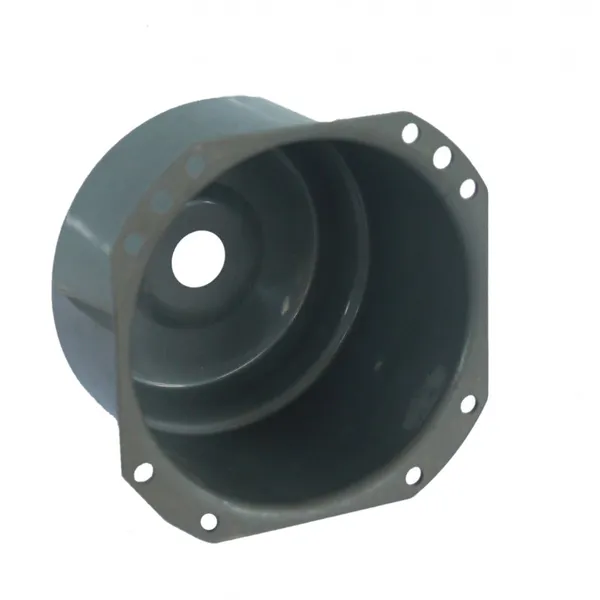
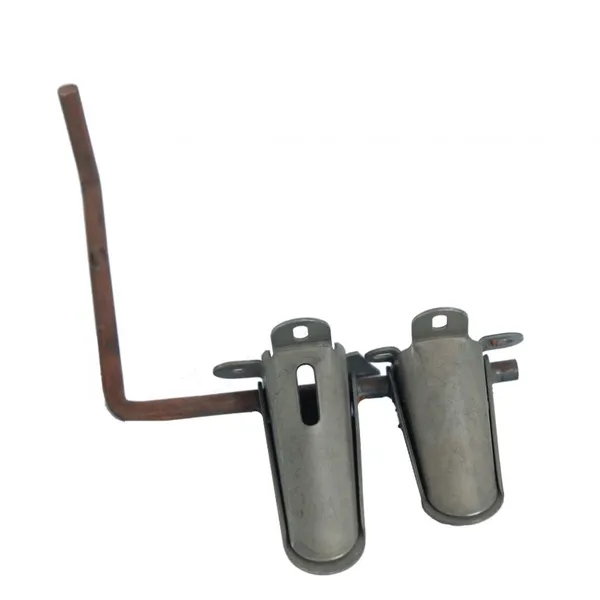
-
Custom CNC Machined Sheet Metal Stamping, Bending, Welding, Laser Cutting & EDM Fabrication ServicesNegotiableMOQ: 1 Piece
-
Custom Precision Metal Stamping Parts High Tolerance Sheet Metal ComponentsNegotiableMOQ: 1 Piece
-
Custom Titanium Sheet Metal Stamping Parts Fabrication for Industrial UseNegotiableMOQ: 1 Piece
-
Durable Custom Metal Deep Drawing Components Surface Treated Forming Components for Construction Engineering EquipmentNegotiableMOQ: 1 Piece
-
China Manufacturer Custom Metal Deep Drawing Components Custom Sheet Metal Deep Drawing FabricationNegotiableMOQ: 1 Piece