Business License
Progressive Die Stamping Cost: A 2026 Pricing Guide for Buyers
Progressive die stamping typically costs 5,000to5,000to150,000+ for tooling. Production parts usually run 0.02to0.02to2.00 each. The exact figure depends on material, part complexity, annual volume, and finishing requirements.
For buyers evaluating high-volume metal forming, the real question is simple. How does total cost of ownership change across the program life?
What if the lowest tooling quote is actually the most expensive choice over five years? Many buyers focus only on the upfront die cost and miss the variables that drive real savings: cycle time, scrap rate, secondary operations, and tooling maintenance. This guide breaks down progressive die stamping cost so you can budget accurately and choose a partner that improves your bottom line.
You will learn what drives tooling and piece pricing, how volume affects cost per part, where hidden expenses appear, and how design choices can reduce spending before any steel is cut.
Key Takeaways
Progressive die tooling usually ranges from 5,000to5,000to150,000+, while production parts often fall between 0.02and0.02and2.00 each.
Cost per part drops sharply as volume rises because the tooling investment is spread across more pieces.
Material type, part complexity, tolerance band, and finishing steps are the largest cost drivers after volume.
In-house mold design and manufacturing can reduce lead times, protect design intent, and lower long-term tooling maintenance cost.
A DFM review before tooling often cuts unnecessary features and reduces both die cost and cycle time.
What Is Progressive Die Stamping?

Progressive die stamping is a high-speed metal forming process. Coil stock feeds through a single die containing multiple stations. Each station performs one operation, such as piercing, blanking, bending, or coining. The part moves through the die until it separates from the carrier strip as a finished piece.
Because all operations happen in one pass, progressive die stamping works well for medium-to-high-volume parts with complex shapes. It delivers repeatability, tight tolerances, and low labor cost once the tool is proven.
At Cangzhou Honglang, we use progressive die stamping capabilities alongside compound dies and transfer tooling. The right choice depends on volume, geometry, and tolerance requirements.
What Drives Progressive Die Stamping Cost?
Understanding cost drivers helps you compare quotes and avoid surprises. The main factors fall into four groups: tooling, material, production, and finishing.
Tooling Design and Build
The die set is usually the largest single expense. A simple progressive die for a flat bracket with a few holes might cost 5,000to5,000to15,000. A multi-station die with forming, piercing, and in-die tapping can exceed $100,000. Therefore, progressive die tooling cost usually scales directly with station count and precision requirements.
Tooling cost depends on:
Number of stations and operations
Tolerance requirements and die precision class
Tool steel grade and expected tool life
Complexity of strip layout and cam actions
Whether the supplier builds the die in-house or outsources it
Outsourced tooling adds markup, extends lead time, and can complicate design changes. In-house mold design and manufacturing keeps these decisions under one roof.
Material Selection
Material accounts for a significant share of piece price. Common stamping materials include cold-rolled steel, stainless steel, galvanized steel, copper, brass, and aluminum. Prices fluctuate with metal markets, but the general hierarchy holds:
Cold-rolled steel: lowest base cost, good formability
Galvanized steel: moderate cost, adds corrosion resistance
Stainless steel: higher cost, strong and corrosion resistant
Copper and brass: premium cost, excellent conductivity
Aluminum: lightweight, moderate-to-high cost depending on alloy
Material thickness also matters. Thicker stock requires more press tonnage, larger dies, and more energy per stroke. Thinner materials can reduce material cost but may demand tighter process control.
Part Complexity and Tolerance
Complex parts need more die stations, precision tooling, and slower press speeds. Features that increase cost include:
Tight bend radii or deep draws
Small holes close to edges
Multiple forming directions
In-die assembly or threading
Critical tolerances below ±0.05 mm
Tighter tolerances require more robust die construction, better press maintenance, and more frequent inspection. That does not mean you should loosen specs unnecessarily. It means you should specify only what the assembly actually needs.
Secondary Operations and Finishing
Progressive dies can incorporate many operations, but some finishes still happen offline. Plating, coating, heat treatment, welding, and assembly add cost after stamping. The more secondary steps a part needs, the higher the total landed cost.
Bundling these operations with one supplier often reduces logistics overhead and quality risk. Cangzhou Honglang provides stamping, sheet metal fabrication, welding, and mechanical processing under one facility. This simplifies sourcing for multi-operation parts.
Typical Progressive Die Stamping Cost Ranges
Every project is different, but the following ranges give buyers a useful baseline for budgeting discussions. Use them to estimate progressive stamping cost and metal stamping cost per part at three common volume levels.
| Cost Element | Low-Complexity Part | Medium-Complexity Part | High-Complexity Part |
|---|---|---|---|
| Tooling cost | 5,000–5,000–15,000 | 20,000–20,000–60,000 | 70,000–70,000–150,000+ |
| Part cost at 10,000 pcs/yr | 0.50–0.50–1.50 | 1.00–1.00–3.00 | 2.00–2.00–5.00+ |
| Part cost at 100,000 pcs/yr | 0.10–0.10–0.30 | 0.20–0.20–0.60 | 0.50–0.50–1.50 |
| Part cost at 1,000,000 pcs/yr | 0.02–0.02–0.10 | 0.05–0.05–0.20 | 0.15–0.15–0.50 |
These figures assume common materials and standard tolerances. Exotic alloys, special coatings, or extremely tight tolerances will push numbers higher. According to Precision Metalforming Association industry data, tooling and material remain the two largest cost drivers across most high-volume stamping programs. Always request a detailed quote that separates tooling, sample, and production costs.
Want a transparent breakdown for your part? Request a quote and our engineering team will review your drawing, material, and volume assumptions.
How Volume Affects Progressive Die Stamping Cost Per Part

Volume is the single most powerful lever on unit cost. The reason is simple: the tooling investment is fixed, so spreading it across more parts reduces the per-piece tooling burden. This is why high volume stamping cost is usually much lower on a per-part basis than low-volume production.
Consider a die that costs $30,000 to build:
At 10,000 parts, tooling adds $3.00 to each part.
At 100,000 parts, tooling adds $0.30 to each part.
At 1,000,000 parts, tooling adds $0.03 to each part.
This is why progressive die stamping is usually chosen for annual volumes above 50,000 to 100,000 pieces. Below that level, the tooling cost may outweigh the savings from faster cycle times. For a deeper look at how tooling complexity shapes pricing, The Fabricator offers practical guidance on estimating stamping cost by operation type and volume tier.
Minimum Order Quantity Considerations
MOQ depends on part size, material coil width, and setup time. A small part on a narrow coil may have an MOQ of a few thousand pieces. A large part on a wide coil may require a full coil purchase, which could be tens of thousands of pieces.
A good supplier will help you balance MOQ, inventory carrying cost, and price breaks. Cangzhou Honglang offers flexible minimum order quantities based on part size and complexity, including prototype and low-volume validation runs.
Hidden Costs Buyers Often Overlook
The quoted tooling and piece price are only part of the story. Experienced buyers also budget for these items:
Tooling maintenance and repair: Dies wear, especially at high volumes. Build a maintenance schedule into your total cost model.
Setup and changeover: Each time the press is set up or adjusted, labor and downtime accumulate.
Scrap and yield: Material lost to setup, pilot runs, and normal process variation affects total material cost.
Inspection and quality documentation: First article inspection, in-process checks, and material certificates add cost but reduce risk.
Logistics and duties: Export packaging, freight, and tariffs affect landed cost, especially for overseas suppliers.
When Marcus, a procurement manager at an electronics OEM, switched to a new stamping supplier in 2024, he celebrated a 15% lower piece price. Six months later, he discovered that die repairs were outsourced overseas. Every maintenance event added three weeks of downtime.
The hidden downtime cost his line more than the original savings. A supplier with in-house mold design and manufacturing would have handled repairs locally.
How to Reduce Progressive Die Stamping Cost Through Design
Design for manufacturability is one of the fastest ways to lower stamping cost. Small drawing changes can reduce die stations, simplify tooling, and improve material utilization.
Optimize Material Utilization
Material often represents 40% to 60% of piece price. A better strip layout can reduce scrap by nesting parts more tightly or using a common-line cut. Even a 5% material savings adds up quickly over millions of parts.
Simplify Geometry
Ask whether every feature is necessary:
Can two holes be combined or eliminated?
Can a tight bend radius be relaxed?
Can secondary features be added in a downstream operation instead of in the die?
Each removed station reduces die cost and maintenance.
Specify Tolerances Realistically
Tighter tolerances than necessary increase tooling cost and slow production. Specify the tolerance band that the assembly truly requires, not the tightest value your CAD software allows.
Consolidate Operations
When possible, design the part so multiple operations happen in the progressive die rather than as separate secondary steps. In-die tapping, coining, or forming can reduce handling and improve repeatability.
A free DFM review can identify these opportunities before any steel is purchased. At Cangzhou Honglang, our engineering team reviews customer drawings for manufacturability and suggests changes that reduce cost without sacrificing function.
When Progressive Die Stamping Is Worth the Investment

Progressive die stamping is not the right choice for every part. It delivers the strongest return when several conditions are met:
Annual volume is high enough to amortize tooling cost
Part geometry benefits from multiple operations in one pass
Tight tolerances and repeatability are required
Long-term production stability matters more than the lowest possible startup cost
For low-volume prototypes or simple brackets, other processes may be more economical. For complex electrical terminals, automotive clips, appliance hardware, or electronics shields at scale, progressive die stamping usually wins on total cost of ownership.
Sarah, a product manager at an HVAC manufacturer, needed 500,000 spring clips per year with a critical retention force. Her first quote used a single-stage process with manual secondary forming. After a DFM review, the supplier proposed a six-station progressive die that eliminated two manual operations.
Tooling cost increased by $18,000, but the part cost dropped by $0.12. Over a five-year program, the savings exceeded $280,000.
Choosing a Supplier That Controls Total Cost
The supplier you choose affects cost as much as the part design. Look for a partner that can:
Design and build tooling in-house
Offer transparent tooling and piece-price breakdowns
Support DFM reviews before tooling
Scale from prototype to high-volume production
Provide quality and inspection documentation
Manage secondary operations under one roof
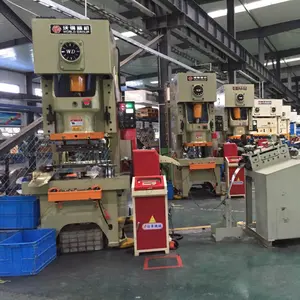
Cangzhou Honglang operates more than 100 sets of stamping machinery across a 10,000-square-meter facility, with 20 technical professionals supporting process analysis, mold design, and production. We supply components to automotive, electronics, HVAC, furniture machinery, wind power, power supply, and telecommunications markets.
Ready to see how progressive die stamping fits your program? Send us your drawing for a free DFM review and detailed cost estimate.
Frequently Asked Questions

How much does progressive die stamping tooling cost?
Progressive die tooling typically costs between 5,000and5,000and150,000+. Simple flat parts with a few holes fall at the low end. Complex multi-station dies with forming, piercing, and in-die operations fall at the high end.
What is the minimum volume for progressive die stamping?
Most buyers consider progressive die stamping at annual volumes of 50,000 to 100,000 parts or more. Below that, the tooling cost per part may be too high compared with short-run or compound-die alternatives.
How does material choice affect stamping cost?
Material is often the largest variable in piece price. Cold-rolled steel is usually the lowest-cost option, while copper, brass, and stainless steel cost more. Thicker materials also increase press tonnage and energy cost.
Can progressive die stamping reduce labor cost?
Yes. Once the die is running, progressive stamping produces parts with minimal operator handling. This reduces labor per part and improves consistency compared with manual or multi-process methods.
What is included in a stamping quote?
A complete quote should include tooling cost, sample cost, unit price at defined volume tiers, material assumptions, secondary operation charges, and packaging or logistics estimates. Avoid quotes that combine tooling into the piece price without transparency.
Conclusion
Progressive die stamping cost is not a single number. It is the combination of tooling investment, material, volume, complexity, and supplier capability. Buyers who understand these drivers can budget accurately. They can also choose the process that delivers the lowest total cost of ownership.
The most important steps are simple. Specify realistic tolerances. Design for manufacturability. Partner with a supplier that controls tooling and production under one roof.
When the die is well engineered and the process is stable, progressive die stamping delivers repeatable, high-quality parts. The cost per part improves with every production cycle.
If you are planning a new stamping program or re-evaluating an existing supplier, Cangzhou Honglang can help. Request a quote or download our capabilities overview to learn more about our progressive die stamping, tooling, and secondary processing services.
Recently Posted
-
Metal Stamping Design Guidelines: 7 Rules for Better Parts
August 4, 2026Good metal stamping design guidelines start with matching the part geometry to the right process, material, and tolerance expectat Read More
 -
Stamped Electrical Terminals: A Complete Guide to Materials, Tolerances, and Sourcing
August 4, 2026Stamped electrical terminals are precision-formed metal components that create reliable electrical connections in automotive, elec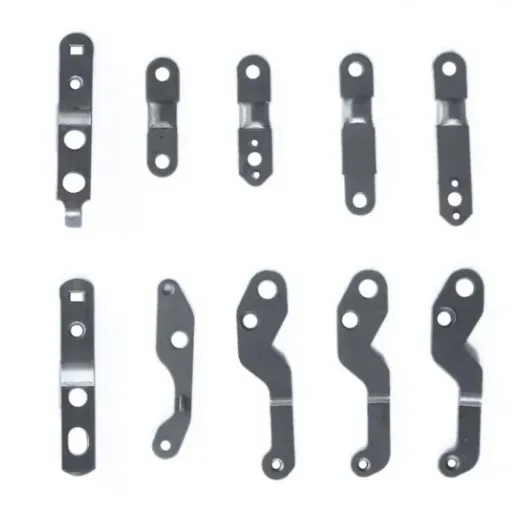 Read More
 -
Electrical Hardware Stamping Components: A Buyer’s Guide
August 3, 2026Electrical hardware stamping components are precision metal parts made from sheet metal or strip material. They include terminals,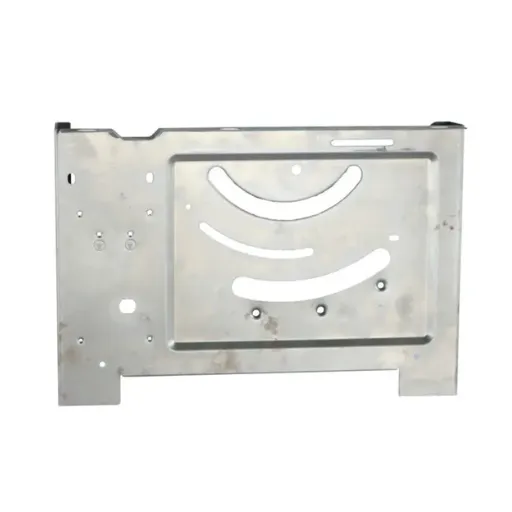 Read More
 -
Sheet Metal Prototyping Services: A Complete Guide for Product Development
August 3, 2026Sheet metal prototyping services help engineers and product teams validate designs, test fit and function, and refine manufacturin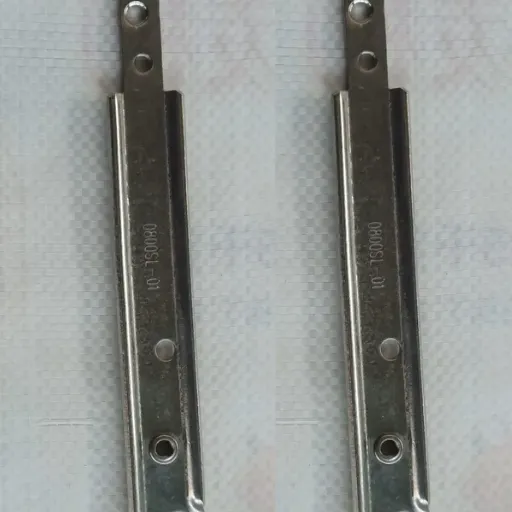 Read More

Contact Us
Recommended Products
-
 Custom Sheet Metal Fabrication: Laser Cutting, Stamping, Bending & Assembly ServicesNegotiableMOQ: 1 Piece
 -
Custom Precision Stainless Steel Metal Stamping Parts for OEM ApplicationsNegotiableMOQ: 1 Piece
-
Custom Automotive Metal Stamping – Stator Rotor Contact Clips for ElectronicsNegotiableMOQ: 1 Piece
-
High-Strength Sheet Metal Stamping for Motorcycle and Automotive ApplicationsNegotiableMOQ: 1 Piece
-
Galvanized Steel Custom Metal Deep Drawing Components Outdoor Deep Drawn Equipment Protective HousingNegotiableMOQ: 1 Piece
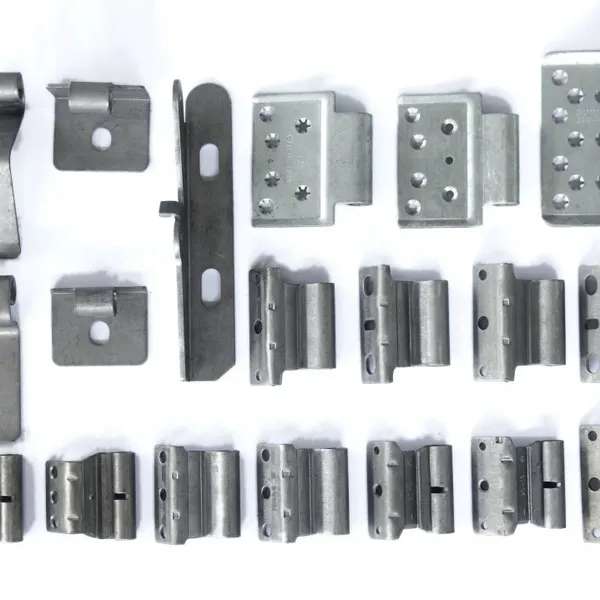
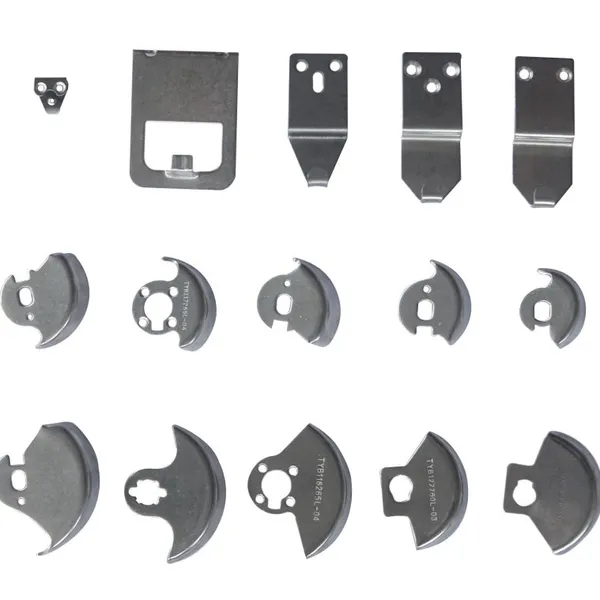
-
Professional Sheet Metal Stamping Process Service for Aluminum or Stainless SteelNegotiableMOQ: 1 Piece
-
Customized Stamping Parts for Furniture Auto Electrical Spring ContactsNegotiableMOQ: 1 Piece
-
Precision Custom Metal Deep Drawing Components Custom Sheet Metal Forming Fabrication ServiceNegotiableMOQ: 1 Piece
-
Custom Precision Deep Drawing Stamping Metal Components for IndustryNegotiableMOQ: 1 Piece
-
Stainless Steel Metal Stamping Components - Punching, Bending, Welding ServicesNegotiableMOQ: 1 Piece
-
Custom Deep Drawing Metal Stamping Components for Factory Construction MachineryNegotiableMOQ: 1 Piece
-
Ra0.4 Surface Roughness Metal Stamping Parts for Automotive Brackets PrecisionNegotiableMOQ: 1 Piece
-
Custom Stamping Parts Stamped Welded Deep Drawn Sheet Metal Fabrication ComponentsNegotiableMOQ: 1 Piece
-
Custom Stainless Steel Flat Leaf Spring – Metal Stamping PartsNegotiableMOQ: 1 Piece
-
Custom Sheet Metal Stamping Parts With Bending, Laser Cutting & Fabrication ServicesNegotiableMOQ: 1 Piece
-
Custom CNC Machined Sheet Metal Stamping, Bending, Welding, Laser Cutting & EDM Fabrication ServicesNegotiableMOQ: 1 Piece
-
Custom Precision Metal Stamping Parts High Tolerance Sheet Metal ComponentsNegotiableMOQ: 1 Piece
-
Custom Titanium Sheet Metal Stamping Parts Fabrication for Industrial UseNegotiableMOQ: 1 Piece
-
Durable Custom Metal Deep Drawing Components Surface Treated Forming Components for Construction Engineering EquipmentNegotiableMOQ: 1 Piece
-
China Manufacturer Custom Metal Deep Drawing Components Custom Sheet Metal Deep Drawing FabricationNegotiableMOQ: 1 Piece