Business License
Multi-Station Progressive Stamping: A Complete Guide to High-Volume Precision Parts
Multi-station progressive stamping is a high-speed metal forming process that produces complex parts in a single die by feeding coil stock through a series of sequential workstations. Each station performs one operation, piercing, blanking, bending, forming, or coining, until the finished part separates from the carrier strip at the final station.
If your application demands millions of tight-tolerance parts per year, this process often outperforms single-stage stamping or secondary machining on speed, repeatability, and total cost. In this guide, we will explain how multi-station progressive dies work, where they deliver the most value, and what buyers and design engineers should look for in a stamping partner.
Key Takeaways
Multi-station progressive stamping combines piercing, blanking, bending, and forming in one continuous die, often producing hundreds of parts per minute.
The process is most cost-effective for medium-to-high volumes where tooling investment can be spread across many parts.
Coil-fed automation and rigid die guidance deliver tighter repeatability than manual transfer or multi-machine routing.
Common applications include electrical terminals, automotive brackets, appliance hardware, and electronics shielding.
Successful projects start with early DFM review, strip-layout optimization, and a partner with in-house tooling capability.
What Is Multi-Station Progressive Stamping?
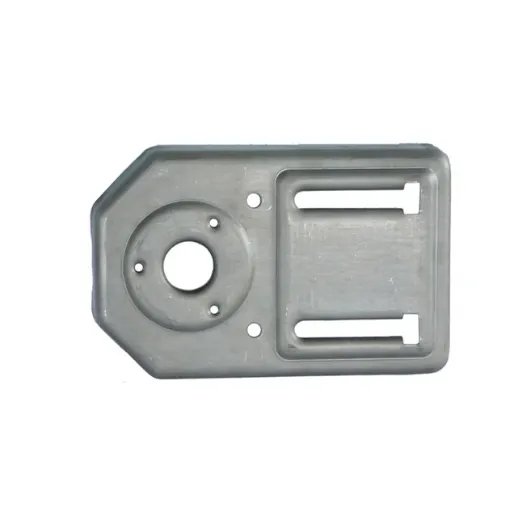
Multi-station progressive stamping, also called progressive die stamping or multi-stage progressive forming, uses a single die set containing multiple stations arranged in a straight line or slight curve. A coil of metal feeds through the die on a fixed pitch. At each press stroke, every station acts simultaneously on a different part position along the strip. The part advances one pitch per stroke until it reaches the final station, where it is cut free.
The term "multi-station" emphasizes that several distinct operations happen in one tool, not across separate machines or manual setups. A simple progressive die might have five stations; a complex electrical-terminal die can have 20 or more.
This differs from three other common approaches:
| Process | Stations | Best For | Typical Speed |
|---|---|---|---|
| Multi-station progressive | Multiple in one die | Small, complex parts at high volume | 100–1,000 SPM |
| Compound die | Single station | Flat parts needing multiple cuts | High |
| Transfer die | Separate stations with mechanical transfer | Large, deep-drawn parts | Moderate |
| Single-stage stamping | One operation per press stroke | Prototypes, low volume, simple shapes | Low |
Multi-station progressive stamping sits in the sweet spot for small-to-medium-sized parts that need several forming operations and high output.
A Real-World Example
When Lisa, a procurement manager at an automotive Tier 2 supplier, needed 2 million bracket clips per year, her first supplier quoted single-stage stamping on three separate presses. The part moved from blanking to piercing to bending, with manual loading between operations. Lot-to-lot variation was high, and the per-piece cost was rising with labor rates.
After switching to a multi-station progressive die, the same part ran through one press at 280 strokes per minute. One operator managed three lines. Dimensional variation dropped, and the total cost per part fell by roughly 18% over 12 months. The higher initial tooling investment paid back in the first production quarter.
How the Multi-Station Progressive Stamping Process Works
Understanding the progressive stamping process helps engineers design parts that run efficiently and helps buyers evaluate quotations accurately.
1. Material Feeding
In a typical multi-station progressive stamping line, coil stock is loaded onto a decoiler and fed through a straightener. A servo or mechanical roll feed advances the strip a precise distance, called the pitch or progression, on every stroke. Pitch accuracy is critical; even a 0.1 mm feed error can misalign holes or bend locations.
2. Piloting and Alignment
Most progressive dies use pilot pins to register the strip before the press applies cutting or forming force. Pilots locate the strip relative to the die more accurately than the feed mechanism alone. Some dies also use carrier strips or tabs to stabilize the part as it moves.
3. Sequential Operations
Each station performs a dedicated operation. A typical sequence for a small bracket might be:
Pierce pilot and locating holes
Pierce functional holes and slots
Blank the outer profile partially
Form bends and tabs
Coin or emboss features
Separate the finished part from the carrier
Because every station acts at once, the die produces one completed part per press stroke after the strip has fully loaded.
4. Scrap and Part Handling
Scrap falls through the die or is rewound for recycling. Finished parts may drop through a chute, slide down a ramp, or be collected by a conveyor or robot. Inline inspection, vision systems, or automated sorting can be added at this stage.
5. In-Process Monitoring
Modern progressive presses monitor tonnage, feed position, and part presence. Sensors can stop the press if a misfeed, slug pull, or tool wear signature is detected. This protects both the die and downstream assembly operations.
Key Advantages of Multi-Station Progressive Stamping
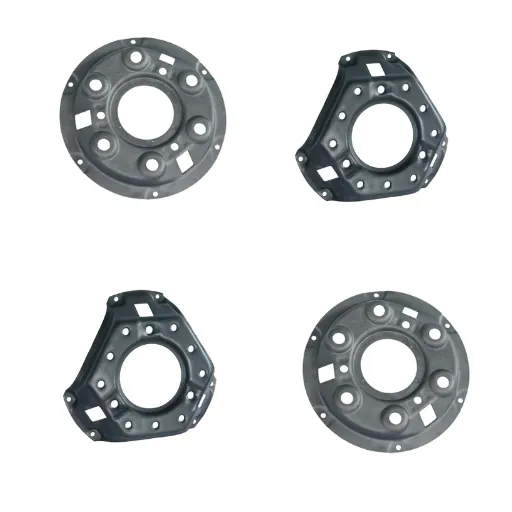
Buyers and engineers choose multi-station progressive stamping for four main reasons: speed, precision, cost structure, and automation compatibility.
High Production Speed
High-speed progressive stamping can run at 100 to 1,000 strokes per minute depending on part size, material, and complexity. Even at a conservative 300 strokes per minute, one press can produce over 14,000 parts per hour. That throughput is difficult to match with machining, transfer tooling, or single-stage stamping.
Excellent Repeatability
Because the part never leaves the strip until the last station, locating features remain intact. Pilots and feed systems hold position from stroke to stroke. This consistency supports tight tolerances and reduces lot-to-lot variation.
Lower Labor Cost per Part
One operator can oversee multiple progressive presses, especially when coil handling and part collection are automated. Setup times are longer than single-stage tooling, but the cost per part drops sharply as volume increases.
Consolidated Operations
Operations that might otherwise require two or three machines happen in one die. This reduces work-in-process inventory, floor space, handling damage, and scheduling complexity. It also lowers the risk of mixing lots or losing traceability.
Design Flexibility
Multi-station progressive dies can include piercing, blanking, forming, bending, coining, embossing, threading, and even light assembly such as staking a terminal onto a carrier. Complex geometries that would be expensive to machine can often be stamped economically.
Progressive Die Stamping Applications and Industries
Multi-station progressive stamping is used wherever small metal parts are needed in large quantities, and these progressive die stamping applications span automotive, electronics, HVAC, and industrial markets. Cangzhou Honglang has supplied progressive-stamped components to automotive, electronics, HVAC, furniture machinery, wind power, power supply, and telecommunications customers.
Automotive
Typical parts include clips, brackets, terminals, connectors, and small structural hardware. These components often require tight tolerances and consistent mechanical properties for assembly reliability.
Electronics and Electrical Hardware
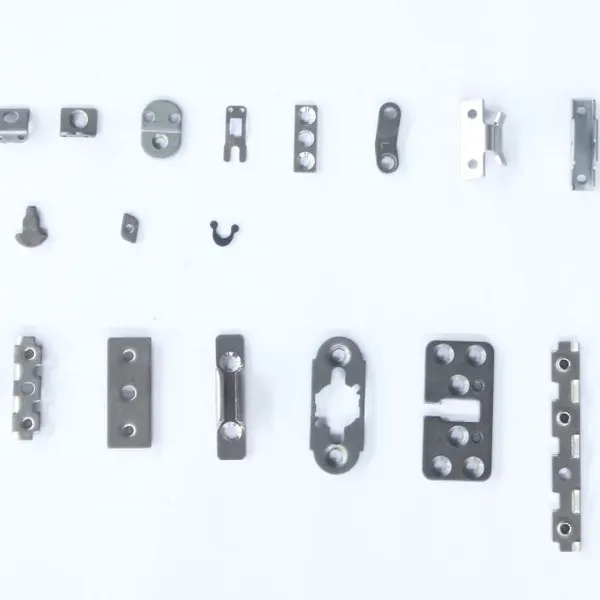
Electrical terminals, connector housings, busbars, shielding cans, and lead frames are classic progressive-stamping applications. See typical terminals, contacts, and shielding parts in our electrical hardware stamping components range.
HVAC and Appliances
Stamped brackets, mounting plates, terminal blocks, and formed sheet metal components benefit from progressive dies when volumes justify tooling investment. Corrosion-resistant coatings can be applied after stamping.
Furniture Machinery and Industrial Equipment
Small levers, hinges, washers, and custom hardware often move from single-stage or laser-cut blanks to progressive dies once demand reaches a steady level.
Renewable Energy and Telecommunications
Connectors, grounding hardware, and mounting clips for wind power, power supply, and telecom infrastructure often require high-volume production with stable quality records.
Design Considerations for Multi-Station Progressive Die Design
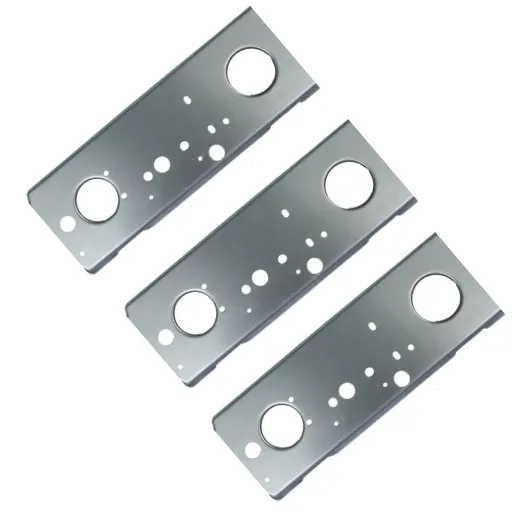
Part design strongly affects progressive-die feasibility, tooling cost, and production efficiency. These guidelines help engineers avoid common pitfalls. For a deeper explore strip layout, piloting, and station planning, read our progressive die design guide.
Strip Layout Is the Foundation
The strip layout is the foundation of every successful multi-station progressive stamping program. It determines how many parts fit across the coil width, how much scrap is generated, and how the carrier supports the part through forming. A good layout balances material utilization, die complexity, and process stability.
Keep Features Perpendicular to Press Stroke When Possible
Holes, slots, and bends that act in the press direction are simplest and most accurate. Side actions, cams, and secondary operations add cost and maintenance.
Maintain Adequate Material Connection
Until the final station, the part must remain attached to the carrier strip. Designers should leave enough material for feeding and handling without compromising function. Carrier width and tab placement should be discussed with the die designer early.
Avoid Sharp Internal Corners
Sharp inside corners concentrate stress and accelerate tool wear. Generous radii improve tool life and reduce cracking, especially in harder materials or thicker stock.
Consider Material Flow in Bending and Forming
Progressive dies form the part while it is still in the strip. Bends too close to other features can distort holes or profiles. Allow sufficient distance between bends and critical dimensions.
Plan for Burr Direction and Edge Quality
Cutting edges produce a burr on one side. If the part must mate with another component, specify which edge should be burr-free or require a secondary deburring operation.
Tolerance Expectations
Progressive dies can hold tight tolerances, but capability depends on material thickness, part geometry, die condition, and press stability. Discuss critical dimensions with your stamping partner before finalizing drawings. Cangzhou Honglang's engineering team reviews every new design for manufacturability and suggests tolerances that balance function with cost.
Tooling, Materials, and Equipment
Tooling quality determines the success of any multi-station progressive stamping program. Understanding what goes into the die helps buyers evaluate quotes and lead times.
Tool Steel and Heat Treatment
Punch and die materials for progressive die design are selected based on material hardness, part volume, and tolerance requirements. Common choices include A2, D2, and M2 tool steels, with coatings such as TiN or TiAlN for abrasive materials. Proper heat treatment extends tool life and maintains dimensional stability.
Die Guidance and Alignment
Progressive dies use guide pins and bushings to maintain alignment between the upper and lower die shoes. Precision guidance is especially important for thin materials or parts with fine pitches.
Press Selection
For high-speed progressive stamping, press tonnage, stroke length, bed size, and speed must match the die and part. High-speed presses with rigid frames and accurate feeds are preferred for thin, complex parts. Heavier parts may require larger presses with slower strokes.
Material Selection
Coil materials for progressive stamping include:
Cold-rolled steel
Stainless steel
Galvanized and coated steels
Copper and brass
Aluminum
Phosphor bronze and beryllium copper
Material thickness, temper, and surface finish all affect forming limits, springback, and tool wear. The stamping partner should recommend the most suitable grade for the application.
Cost Drivers and Economic Justification
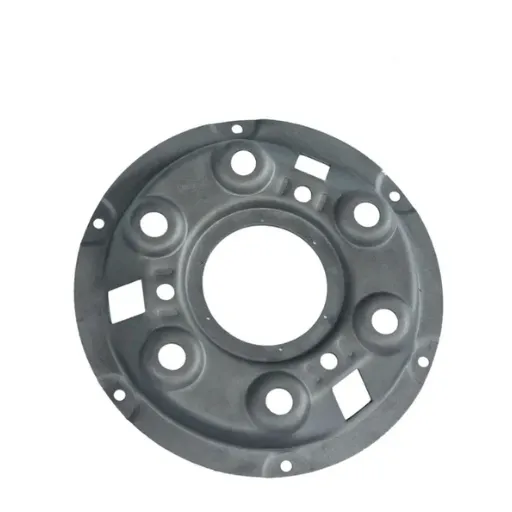
Multi-station progressive stamping requires a higher tooling investment than single-stage or soft-tool methods. Understanding the cost structure helps justify the investment.
Tooling Cost
Progressive-die tooling can range from a few thousand dollars for simple parts to well over $100,000 for complex multi-station dies. Cost depends on part complexity, number of stations, material, tolerance requirements, and expected tool life.
Piece-Price Economics
At low volumes, the tooling cost dominates. As volume rises, the per-part stamping cost becomes the main factor. The crossover point where progressive stamping becomes cheaper than alternative processes varies by part but often falls between 10,000 and 100,000 parts.
Total Cost of Ownership
Buyers should consider more than unit price. Factors such as reduced inspection, lower scrap, faster delivery, and fewer supplier touchpoints can make progressive stamping the lower-total-cost option even when piece price is similar.
Mini-Story: The Hidden Cost of Cheap Tooling
Mike, a sourcing manager for an electronics OEM, accepted a quote with unusually low tooling cost for a terminal connector. Six months into production, the die required frequent sharpening, dimensional drift increased, and the supplier struggled to maintain plating compatibility. Rejected lots climbed to 4%.
After Cangzhou Honglang rebuilt the die with proper tool steel, station spacing, and pilot alignment, reject rates fell below 0.5% and tool life tripled. The revised tooling cost more upfront but saved over $12,000 in rework and inspection during the first year.
Quality Control in Progressive Stamping
Consistent quality in multi-station progressive stamping depends on process control, not just final inspection.
In-Process Inspection
Critical dimensions should be checked during setup and at defined intervals. Poka-yoke fixtures, go/no-go gauges, and automated vision systems catch issues before thousands of parts are affected.
First Article Inspection
A thorough first article inspection validates that the progressive stamping process produces parts within specification before mass production begins. This is especially important for automotive and regulated electronics applications.
Statistical Process Control
Monitoring key dimensions over time helps detect trends before they become defects. Cangzhou Honglang uses SPC methods for high-volume programs to maintain tight process windows.
Material Traceability
For critical applications, material certificates and lot traceability protect both supplier and customer. Ask your stamping partner how material lots are tracked from receiving through shipment.
Choosing the Right Multi-Station Progressive Stamping Partner
Not every stamping supplier is equipped to design, build, and run complex progressive dies. Here is what to evaluate.
In-House Tooling Capability
A partner that designs and builds progressive dies internally can respond faster to design changes, protect intellectual property, and maintain tighter control over tool quality. Cangzhou Honglang offers in-house mold design and manufacturing to keep tooling under one roof.
Engineering Support
Look for a supplier with a technical team that reviews drawings, proposes strip layouts, and flags manufacturability issues before cutting steel. Early collaboration reduces tooling risk and avoids expensive changes later.
Production Capacity and Equipment
Confirm the supplier has enough presses, feed systems, and secondary equipment to support your volume. Facility size and machine count are useful indicators of real capacity.
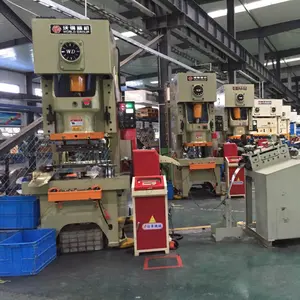
Cangzhou Honglang operates more than 100 sets of stamping machinery across a 10,000-square-meter site with 4,000 square meters of built-up production area. Our workforce exceeds 100 people, including 20 technical professionals who support tooling design and production engineering.
Quality Systems and Documentation
Ask about inspection equipment, certification status, and documentation practices. For automotive and electronics customers, PPAP readiness, material certificates, and inspection reports are often required.
Communication and Responsiveness
Progressive-die projects involve design reviews, sample approvals, and production ramp-up. Clear communication across time zones and direct access to engineering contacts reduce risk.
Want to see how progressive stamping fits your project? Request a quote and send us your drawing for a free DFM review and strip-layout recommendation.
Frequently Asked Questions
What is the difference between progressive die stamping and multi-station progressive stamping?
The terms are often used interchangeably. "Multi-station" specifically highlights that the die contains multiple workstations performing different operations in sequence.
What volumes justify multi-station progressive stamping?
Multi-station progressive stamping is usually economical for annual volumes above 10,000 to 100,000 parts, depending on part complexity and tooling cost. Very high volumes, millions per year, are where the process shows its strongest advantage.
How tight can tolerances be held?
Tolerance capability depends on material thickness, part geometry, die precision, and press condition. Many features can be held to ±0.05 mm or tighter. Critical dimensions should be reviewed with the die engineer during DFM.
What materials work best?
Coil-fed materials including cold-rolled steel, stainless steel, copper, brass, aluminum, and specialty alloys can all be used in progressive die stamping. Material temper and thickness must match the forming requirements.
How long does progressive-die tooling take to build?
Simple dies may take 3 to 5 weeks. Complex multi-station dies can take 8 to 16 weeks or longer. In-house tooling capability shortens this timeline and reduces coordination risk.
Can progressive stamping include secondary operations?
Yes. Many dies include in-die tapping, staking, assembly, coining, or marking. Operations that cannot be done in the die, such as welding, plating, or heat treatment, are handled as secondary steps.
Conclusion
Multi-station progressive stamping is one of the most efficient ways to produce complex metal parts at high volume. By combining multiple operations in a single die, it delivers speed, repeatability, and lower total cost for applications ranging from automotive clips to electrical terminals.
Success with multi-station progressive stamping depends on three things: a part design suited to the process, a well-engineered progressive die, and a manufacturing partner with the tooling expertise and capacity to support the program long term.
At Cangzhou Honglang, we integrate product process analysis, mold design, mold manufacturing, and stamping production under one roof. Our team of 20 technical professionals supports customers from initial DFM review through high-volume production.
Ready to explore multi-station progressive stamping for your next project? Request a quote or download our capabilities overview to learn more about our tooling, stamping, and finishing services.
Recently Posted
-
Metal Stamping Design Guidelines: 7 Rules for Better Parts
August 4, 2026Good metal stamping design guidelines start with matching the part geometry to the right process, material, and tolerance expectat Read More
 -
Stamped Electrical Terminals: A Complete Guide to Materials, Tolerances, and Sourcing
August 4, 2026Stamped electrical terminals are precision-formed metal components that create reliable electrical connections in automotive, elec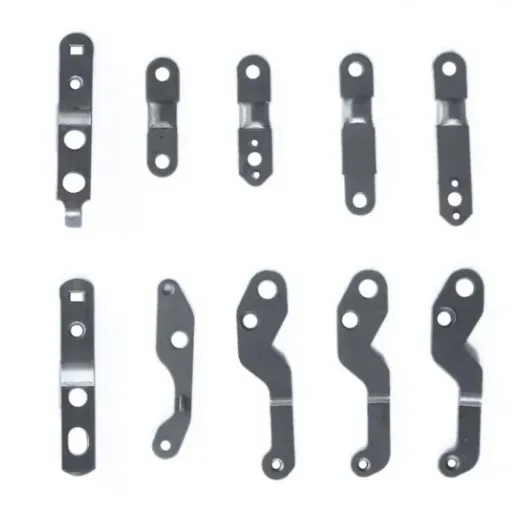 Read More
 -
Electrical Hardware Stamping Components: A Buyer’s Guide
August 3, 2026Electrical hardware stamping components are precision metal parts made from sheet metal or strip material. They include terminals,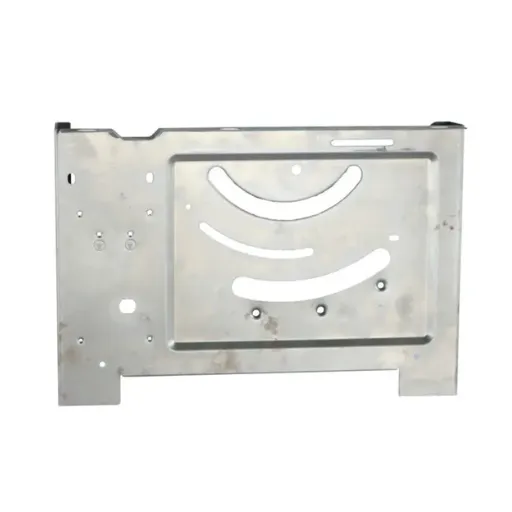 Read More
 -
Sheet Metal Prototyping Services: A Complete Guide for Product Development
August 3, 2026Sheet metal prototyping services help engineers and product teams validate designs, test fit and function, and refine manufacturin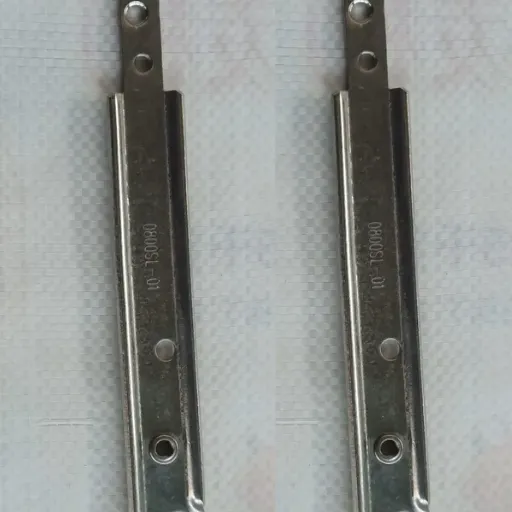 Read More

Contact Us
Recommended Products
-
 Custom Sheet Metal Fabrication: Laser Cutting, Stamping, Bending & Assembly ServicesNegotiableMOQ: 1 Piece
 -
Custom Precision Stainless Steel Metal Stamping Parts for OEM ApplicationsNegotiableMOQ: 1 Piece
-
Custom Automotive Metal Stamping – Stator Rotor Contact Clips for ElectronicsNegotiableMOQ: 1 Piece
-
High-Strength Sheet Metal Stamping for Motorcycle and Automotive ApplicationsNegotiableMOQ: 1 Piece
-
Galvanized Steel Custom Metal Deep Drawing Components Outdoor Deep Drawn Equipment Protective HousingNegotiableMOQ: 1 Piece
-
Professional Sheet Metal Stamping Process Service for Aluminum or Stainless SteelNegotiableMOQ: 1 Piece
-
Customized Stamping Parts for Furniture Auto Electrical Spring ContactsNegotiableMOQ: 1 Piece
-
Precision Custom Metal Deep Drawing Components Custom Sheet Metal Forming Fabrication ServiceNegotiableMOQ: 1 Piece
-
Custom Precision Deep Drawing Stamping Metal Components for IndustryNegotiableMOQ: 1 Piece
-
Stainless Steel Metal Stamping Components - Punching, Bending, Welding ServicesNegotiableMOQ: 1 Piece
-
Custom Deep Drawing Metal Stamping Components for Factory Construction MachineryNegotiableMOQ: 1 Piece
-
Ra0.4 Surface Roughness Metal Stamping Parts for Automotive Brackets PrecisionNegotiableMOQ: 1 Piece
-
Custom Stamping Parts Stamped Welded Deep Drawn Sheet Metal Fabrication ComponentsNegotiableMOQ: 1 Piece
-
Custom Stainless Steel Flat Leaf Spring – Metal Stamping PartsNegotiableMOQ: 1 Piece
-
Custom Sheet Metal Stamping Parts With Bending, Laser Cutting & Fabrication ServicesNegotiableMOQ: 1 Piece
-
Custom CNC Machined Sheet Metal Stamping, Bending, Welding, Laser Cutting & EDM Fabrication ServicesNegotiableMOQ: 1 Piece
-
Custom Precision Metal Stamping Parts High Tolerance Sheet Metal ComponentsNegotiableMOQ: 1 Piece
-
Custom Titanium Sheet Metal Stamping Parts Fabrication for Industrial UseNegotiableMOQ: 1 Piece
-
Durable Custom Metal Deep Drawing Components Surface Treated Forming Components for Construction Engineering EquipmentNegotiableMOQ: 1 Piece
-
China Manufacturer Custom Metal Deep Drawing Components Custom Sheet Metal Deep Drawing FabricationNegotiableMOQ: 1 Piece