Business License
Sheet Metal Fabrication vs Stamping: How to Choose the Right Process
The core difference is simple: sheet metal fabrication cuts, bends, and assembles metal sheets into finished parts, while metal stamping uses hardened dies and presses to form, blank, pierce, or bend metal in one operation or a progressive sequence.
Need one enclosure prototype? Fabrication is usually the faster path. Need 500,000 identical brackets? Stamping will almost always deliver lower per-part cost and tighter repeatability. But the decision is rarely that simple. Part geometry, material thickness, tolerance requirements, tooling budget, and lead time all push the answer in different directions.
In this guide, we compare sheet metal fabrication vs stamping across the factors that matter most to design engineers and sourcing managers. You will learn how each process works, where each one wins, and how some projects benefit from using both.
Key Takeaways
Sheet metal fabrication is best for low-to-medium volumes, large parts, and frequent design changes because it requires little or no hard tooling.
Metal stamping is best for high-volume production, tight tolerances, and complex geometries because dies deliver repeatable precision across millions of cycles.
Tooling cost is the main gatekeeper: fabrication avoids die investment, while stamping pays back through lower piece price at scale.
Many products combine both processes, using fabrication for prototypes and stamping for mass production.
Cangzhou Honglang offers sheet metal parts, stamping components, and in-house mold design so you can match the process to each production stage.
What Is Sheet Metal Fabrication?
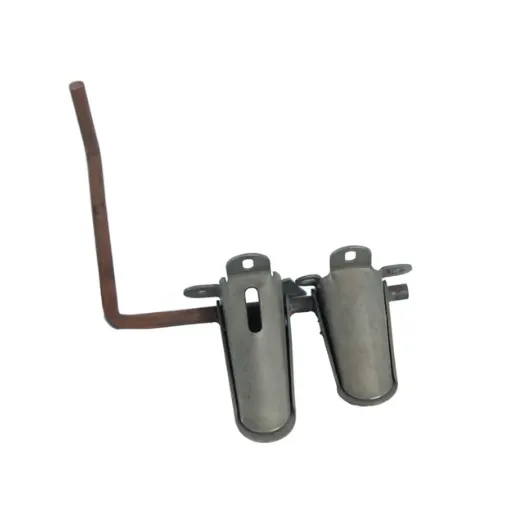
Sheet metal fabrication is a group of manufacturing processes that turn flat metal sheets into finished parts or assemblies. Common operations include laser cutting, plasma cutting, shearing, brake press bending, punching, rolling, welding, and hardware insertion. Fabrication does not typically rely on dedicated dies, so setup is faster and design changes are easier.
Common Fabrication Processes
Laser cutting uses a focused beam to cut complex contours from sheet stock with minimal heat-affected zone.
Brake press bending forms straight-line bends using a punch and die set selected from a library of standard tooling.
Punching creates holes, slots, and cutouts with turrets or CNC punch presses.
Welding joins multiple fabricated pieces into assemblies or frames.
Rolling curves sheet metal into cylinders, cones, or radiused profiles.
Because each operation is programmed from a CAD file, fabrication is highly flexible. A single machine can produce dozens of different parts in the same shift by loading a new program and material sheet. That flexibility makes fabrication the default choice for prototypes, custom enclosures, brackets, panels, and low-volume production runs.
When Marcus, an HVAC equipment engineer, needed twenty prototype condenser housings for field testing, his team chose fabrication. They received the first units in eight days, tested the fit, adjusted the mounting-hole pattern, and received revised parts three days later. No hard tooling meant no die revision cost.
What Is Metal Stamping?
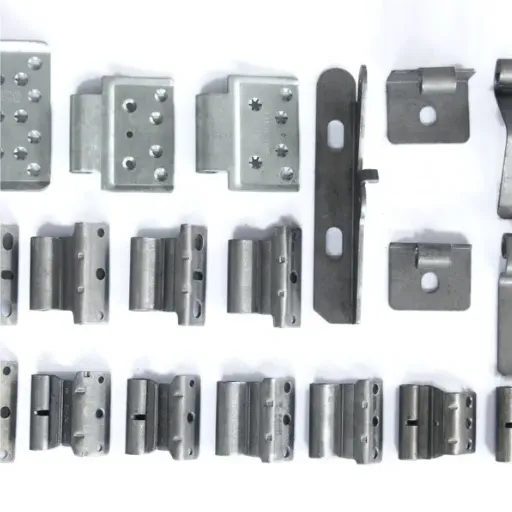
Metal stamping is a forming process that uses presses and dies to cut or shape metal from coil or sheet stock. Operations include blanking, piercing, bending, forming, coining, embossing, and deep drawing. Stamping can run on single-operation dies, compound dies, or progressive dies that perform multiple cuts and forms in one pass.
Common Stamping Operations
Blanking cuts a flat shape from sheet or coil stock.
Piercing creates holes or cutouts without removing the outer contour.
Bending forms angles, channels, and flanges.
Progressive die stamping feeds coil stock through a series of stations, producing a finished part at each press stroke.
Deep drawing pulls flat metal into cup-shaped, box-shaped, or cylindrical forms.
Stamping requires dedicated tooling, so the upfront investment is higher than fabrication. Once the die is proven, however, the process runs at high speed with very low labor content per part. That economy makes stamping the standard for automotive brackets, electrical terminals, appliance hardware, and any component produced in high volume.
At Cangzhou Honglang, our progressive die stamping lines produce complex electrical hardware and structural components in a single high-speed pass. Our in-house mold design and manufacturing team builds and maintains the tooling, which protects lead times and keeps tolerances under our direct control.
Sheet Metal Fabrication vs Stamping: Key Differences
The table below summarizes the practical differences buyers and engineers should weigh.
| Factor | Sheet Metal Fabrication | Metal Stamping |
|---|---|---|
| Tooling cost | Low to none | Moderate to high |
| Best volume | 1 to ~5,000 units | 5,000 to millions |
| Per-part cost | Higher at volume, no tooling amortization | Lower at volume, tooling cost spread over parts |
| Tolerance control | Good, operator and machine dependent | Excellent, die-controlled repeatability |
| Design flexibility | High, easy to change CAD and reprogram | Lower, die changes require rework or new tooling |
| Part size | Small to very large | Small to medium-large, press dependent |
| Geometric complexity | Moderate, limited by bend and weld access | High, especially with progressive dies |
| Lead time to first part | Days to a few weeks | Weeks to months including tooling |
| Surface finish | Clean cuts, may need deburring | Consistent, die marks possible depending on material |
Tolerance and Repeatability
Stamping holds tighter tolerances because the die determines every critical dimension. Once the tool is qualified, part-to-part variation stays small. Fabrication tolerances depend on machine accuracy, fixture quality, operator skill, and the number of setups.
For precision electrical terminals or automotive clips, stamping is usually the safer choice. For large HVAC panels where a fraction of a millimeter does not affect function, fabrication is perfectly adequate.
Material Considerations
Both processes handle steel, stainless steel, aluminum, copper, and brass. Stamping typically uses coil stock for high-speed feeding and consistent thickness. Fabrication often uses sheet stock in a wider range of gauges and sizes. Very thin foils and very thick plates may favor one process over the other depending on the equipment.
When to Choose Sheet Metal Fabrication
Fabrication is the right path when your project matches one or more of these conditions:
Low volume that cannot justify die tooling.
Frequent design changes during product development or market testing.
Large parts such as enclosures, panels, or frames that exceed practical die or press sizes.
Complex assemblies that require welding, hardware insertion, or multiple material thicknesses.
Tight initial timeline when you need parts before a die could be built.
A product manager at a robotics startup, Sarah, needed fifty custom brackets for a beta build. She considered stamping because the final product would eventually ship 20,000 units per year. But her beta schedule allowed only three weeks, and the bracket geometry was still changing based on motor-mount feedback. Fabrication gave her parts in ten days and let her iterate twice without tooling penalties.
Industries That Rely on Fabrication
Industrial machinery frames and guards
HVAC housings, ductwork, and panels
Electronic enclosures and chassis
Custom architectural metalwork
Prototype and short-run automotive fixtures
If your project looks like these, our sheet metal parts capabilities include cutting, bending, welding, and finishing under one roof.
When to Choose Metal Stamping
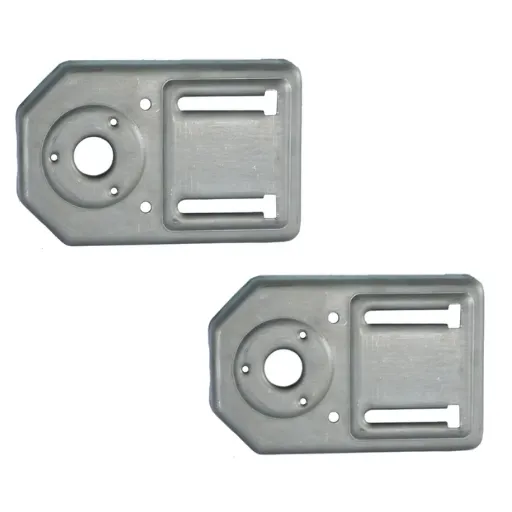
Stamping is the better fit when your project matches these conditions:
High volume where tooling cost spreads across many parts.
Tight tolerances that must hold lot after lot.
Complex geometry that can be formed efficiently in a progressive die.
Stable design that will not change during the production run.
Thin-gauge material such as electrical terminals, clips, and shims.
An automotive buyer named David switched a stamped bracket from fabrication to stamping once annual demand reached 80,000 pieces. The die cost $18,000, but the piece price dropped from $0.85 to $0.31. Over the first year, the program saved more than $27,000 after tooling payback. Repeatability also improved, reducing downstream assembly issues.
Industries That Rely on Stamping
Automotive clips, brackets, and terminals
Electrical connectors and busbars
Appliance hardware and small structural components
Electronics shields, contacts, and lead frames
HVAC stamped fasteners and mounting hardware
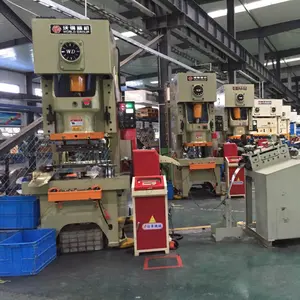
Cangzhou Honglang supplies stamping components to these industries and supports volumes from prototype runs to high-volume programs across more than 100 sets of stamping machinery.
Cost Comparison: Fabrication vs Stamping
Cost is usually the deciding factor, but the calculation changes with volume.
Fabrication Costs
No or low tooling: Setup uses existing machine tools and fixtures.
Higher labor per part: Each bend, cut, and weld adds operator or machine time.
Economies of scale are limited: Beyond a certain volume, adding more machines and labor becomes inefficient.
Stamping Costs
Upfront tooling: Die design, machining, heat treatment, and tryout represent a fixed investment.
Lower labor per part: Once running, a stamping press produces parts rapidly with minimal operator attention.
Strong economies of scale: The more parts produced, the lower the per-unit cost.
Break-Even Analysis
The break-even point depends on part complexity, material, and annual volume. A simple bracket may break even at 3,000 to 5,000 pieces. A complex progressive-die electrical terminal may need 50,000 pieces or more to justify the tooling.
The best approach is to model total cost of ownership over the expected product life. Include tooling amortization, piece price, inspection, scrap, and logistics in the calculation.
If you are unsure which process is more economical, send your drawing for a custom quote. Our engineering team can quote both fabrication and stamping routes so you can compare total cost side by side.
Can You Use Both Processes Together?
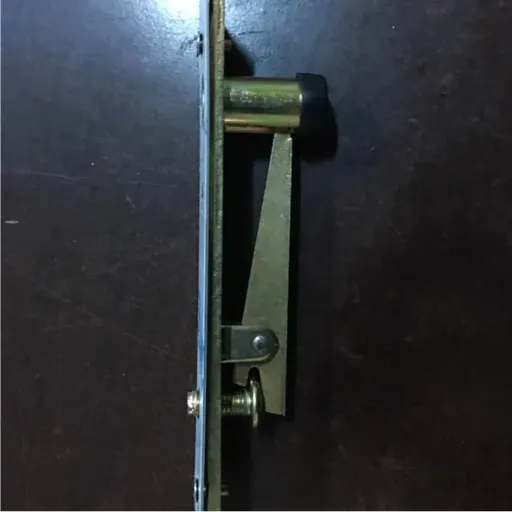
Yes. Many products move through fabrication during development and transition to stamping for production. Other products combine both permanently.
Development Pathway
Prototype with fabrication to validate fit, form, and function.
Refine the design based on test feedback.
Build production tooling for stamping once the design is frozen.
Run validation samples and first-article inspection.
Release to mass production on stamping lines.
This pathway protects development speed while capturing production efficiency.
Hybrid Assemblies
Some assemblies naturally use both processes. A telecom enclosure might use a fabricated frame because it is large and low volume. The internal grounding clips and cable-management brackets, however, could be stamped because they are small and produced in high volume. Using the right process for each component lowers total assembly cost without forcing every part into the same manufacturing method.
At Cangzhou Honglang, our capabilities span sheet metal fabrication, stamping, welding, and mechanical processing. That integration lets us recommend the most efficient path for each part in your assembly rather than forcing every component into a single process.
How to Decide for Your Project
Use this checklist to steer the decision:
Confirm annual volume and product lifetime. Higher volumes generally favor stamping.
List critical tolerances. Tight, repeatable tolerances push toward stamping.
Assess design stability. If the design is likely to change, fabrication is lower risk.
Measure part size and geometry. Very large or welded assemblies often require fabrication.
Calculate total cost of ownership. Include tooling, piece price, scrap, inspection, and logistics.
Check lead-time constraints. Fabrication delivers parts faster; stamping takes longer to start but runs faster once launched.
Plan for secondary operations. Welding, plating, coating, or assembly may fit better with one process than the other.
Working through these questions with your supplier early prevents expensive surprises later. A supplier that offers both fabrication and stamping can give you an unbiased recommendation instead of steering every project toward the only process they own.
Frequently Asked Questions
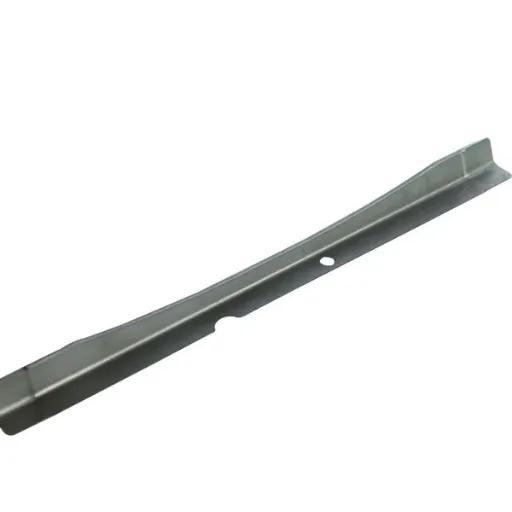
What is the main difference between sheet metal fabrication and stamping?
Sheet metal fabrication builds parts by cutting, bending, and assembling sheet stock without dedicated dies. Metal stamping uses custom dies and presses to cut or form parts in high volumes with tight repeatability.
Which is cheaper, fabrication or stamping?
Fabrication is cheaper at low volumes because it avoids tooling cost. Stamping becomes cheaper as volume rises because the fixed tooling cost is spread across many parts and the per-unit labor content is lower.
Can I use fabrication for prototyping and stamping for production?
Yes. Many engineers fabricate prototypes and first-article parts to validate the design, then build stamping tooling for full production. This hybrid path is common in automotive, electronics, and appliance development.
What materials work for both processes?
Steel, stainless steel, aluminum, copper, and brass can all be fabricated and stamped. The best material and thickness depend on the part geometry, strength requirement, and corrosion environment.
How do I know if my part is better suited for stamping?
If your annual volume is high, your tolerances are tight, your design is stable, and your part fits within standard press and die sizes, stamping is likely the better choice. A supplier with in-house tooling can confirm after reviewing your drawing.
Conclusion
Sheet metal fabrication and metal stamping are not competitors; they are tools for different production realities. Fabrication offers speed, flexibility, and low tooling investment for prototypes and low-to-medium volumes. Stamping delivers precision, repeatability, and low per-part cost when volumes justify the tooling.
The best sourcing decision weighs volume, tolerance, geometry, lead time, and total cost of ownership. In many cases, the smartest path uses fabrication early and stamping later, or assigns each component in an assembly to the process that suits it best.
If you are deciding between sheet metal fabrication vs stamping for an upcoming project, Cangzhou Honglang can help. Our team will review your drawing, compare both manufacturing routes, and recommend the most cost-effective path from prototype through production.
Recently Posted
-
Metal Stamping Design Guidelines: 7 Rules for Better Parts
August 4, 2026Good metal stamping design guidelines start with matching the part geometry to the right process, material, and tolerance expectat Read More
 -
Stamped Electrical Terminals: A Complete Guide to Materials, Tolerances, and Sourcing
August 4, 2026Stamped electrical terminals are precision-formed metal components that create reliable electrical connections in automotive, elec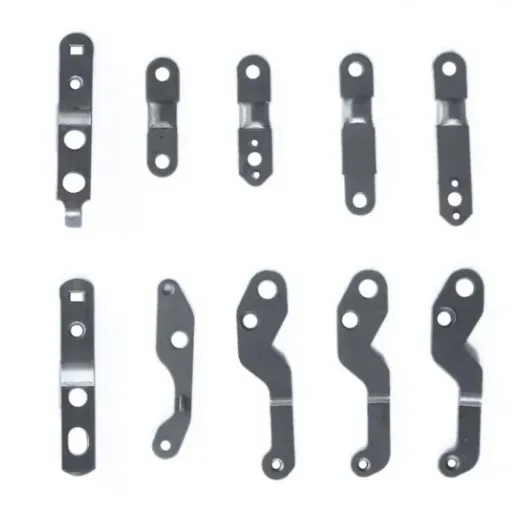 Read More
 -
Electrical Hardware Stamping Components: A Buyer’s Guide
August 3, 2026Electrical hardware stamping components are precision metal parts made from sheet metal or strip material. They include terminals,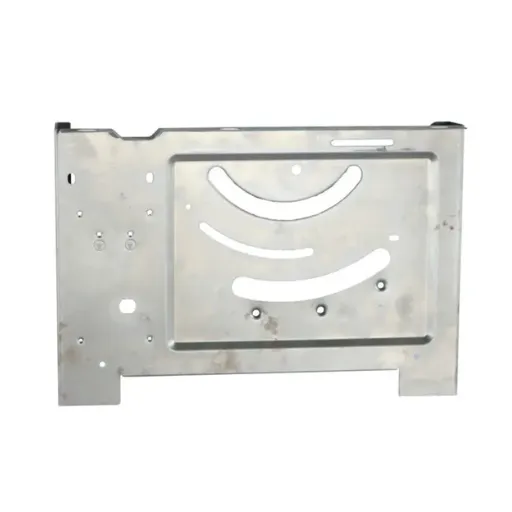 Read More
 -
Sheet Metal Prototyping Services: A Complete Guide for Product Development
August 3, 2026Sheet metal prototyping services help engineers and product teams validate designs, test fit and function, and refine manufacturin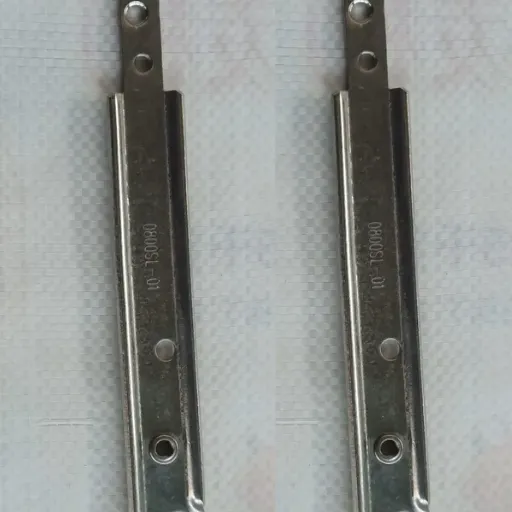 Read More

Contact Us
Recommended Products
-
 Custom Sheet Metal Fabrication: Laser Cutting, Stamping, Bending & Assembly ServicesNegotiableMOQ: 1 Piece
 -
Custom Precision Stainless Steel Metal Stamping Parts for OEM ApplicationsNegotiableMOQ: 1 Piece
-
Custom Automotive Metal Stamping – Stator Rotor Contact Clips for ElectronicsNegotiableMOQ: 1 Piece
-
High-Strength Sheet Metal Stamping for Motorcycle and Automotive ApplicationsNegotiableMOQ: 1 Piece
-
Galvanized Steel Custom Metal Deep Drawing Components Outdoor Deep Drawn Equipment Protective HousingNegotiableMOQ: 1 Piece
-
Professional Sheet Metal Stamping Process Service for Aluminum or Stainless SteelNegotiableMOQ: 1 Piece
-
Customized Stamping Parts for Furniture Auto Electrical Spring ContactsNegotiableMOQ: 1 Piece
-
Precision Custom Metal Deep Drawing Components Custom Sheet Metal Forming Fabrication ServiceNegotiableMOQ: 1 Piece
-
Custom Precision Deep Drawing Stamping Metal Components for IndustryNegotiableMOQ: 1 Piece
-
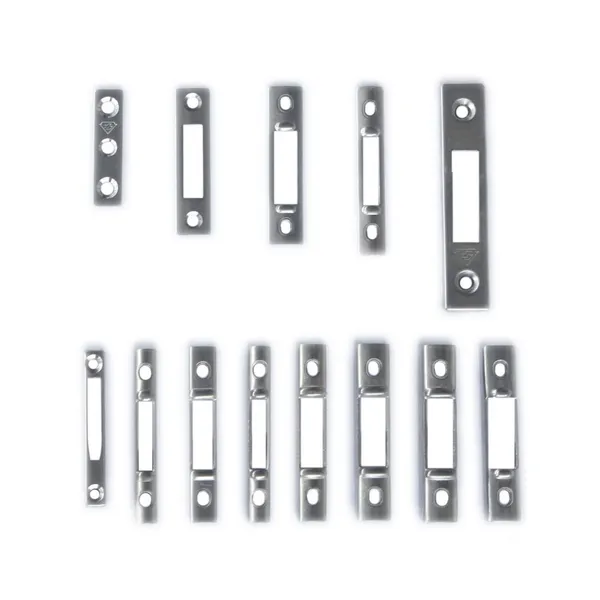
Stainless Steel Metal Stamping Components - Punching, Bending, Welding ServicesNegotiableMOQ: 1 Piece
-
Custom Deep Drawing Metal Stamping Components for Factory Construction MachineryNegotiableMOQ: 1 Piece
-
Ra0.4 Surface Roughness Metal Stamping Parts for Automotive Brackets PrecisionNegotiableMOQ: 1 Piece
-
Custom Stamping Parts Stamped Welded Deep Drawn Sheet Metal Fabrication ComponentsNegotiableMOQ: 1 Piece
-
Custom Stainless Steel Flat Leaf Spring – Metal Stamping PartsNegotiableMOQ: 1 Piece
-
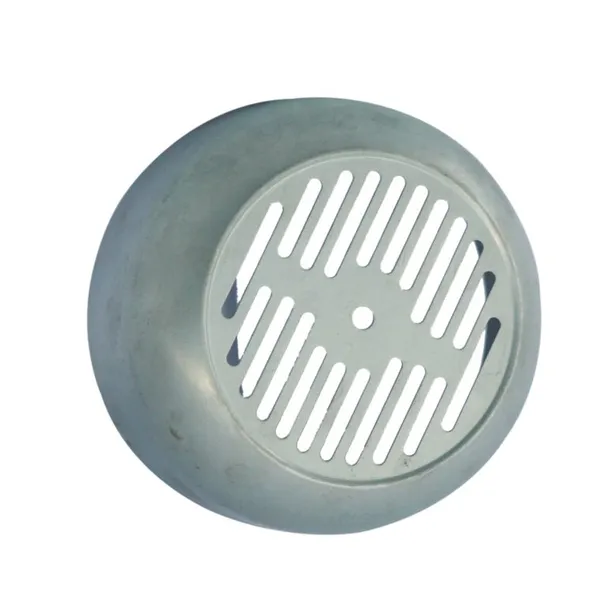
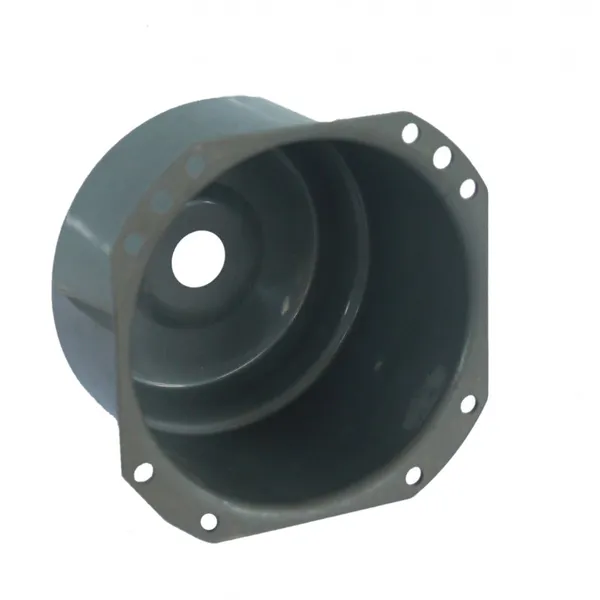
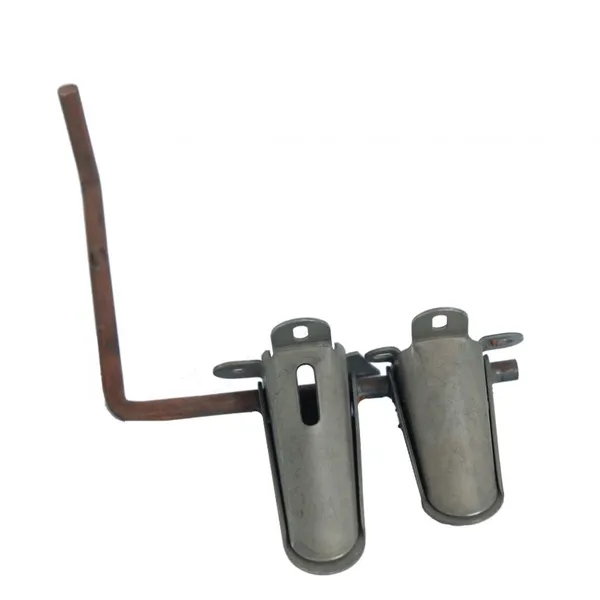
Custom Sheet Metal Stamping Parts With Bending, Laser Cutting & Fabrication ServicesNegotiableMOQ: 1 Piece
-
Custom CNC Machined Sheet Metal Stamping, Bending, Welding, Laser Cutting & EDM Fabrication ServicesNegotiableMOQ: 1 Piece
-
Custom Precision Metal Stamping Parts High Tolerance Sheet Metal ComponentsNegotiableMOQ: 1 Piece
-
Custom Titanium Sheet Metal Stamping Parts Fabrication for Industrial UseNegotiableMOQ: 1 Piece
-
Durable Custom Metal Deep Drawing Components Surface Treated Forming Components for Construction Engineering EquipmentNegotiableMOQ: 1 Piece
-
China Manufacturer Custom Metal Deep Drawing Components Custom Sheet Metal Deep Drawing FabricationNegotiableMOQ: 1 Piece