Business License
Sheet Metal Fabrication Cost Estimator: How to Budget Accurate Quotes
A reliable sheet metal fabrication cost estimator breaks every quote into five core drivers: material, labor, equipment time, tooling, and finishing. For most custom parts, total cost falls between 5and5and100 per piece for low volumes, dropping significantly as quantity increases.
What if two suppliers quote the same drawing and one is 40% lower? The gap almost never comes from magic. It comes from different assumptions about scrap, setup time, finishing, and how aggressively each supplier has optimized the nest and bend sequence. Buyers who understand those assumptions get better quotes and avoid surprise charges later.
This guide will help you estimate sheet metal fabrication costs like an experienced buyer. You will learn what drives price, how to build a quick estimate, where online calculators fall short, and how to get a fabricator's quote that matches your real budget.
Key Takeaways
Material, labor, equipment time, tooling, and finishing are the five core cost drivers for any sheet metal fabrication cost estimator.
Low-volume custom parts typically range from 5to5to100 per piece, with per-unit cost dropping 30% to 70% at higher volumes.
Online estimators are useful for rough budgeting but cannot replace a supplier quote that accounts for your specific geometry and tolerance.
Hidden costs such as setup, programming, inspection, packaging, and engineering changes can add 15% to 40% if not included upfront.
A detailed fabricator quote with DFM feedback, material breakdown, and volume breaks gives the most accurate estimate.
What a Sheet Metal Fabrication Cost Estimator Actually Calculates
Every sheet metal fabrication cost estimator, whether a simple online form or a detailed supplier spreadsheet, tries to predict the same thing: how much it costs to turn raw sheet metal into a finished part. The best estimators break the job into clear cost buckets rather than spitting out a single number.
The five core drivers are:
Material cost: The raw sheet or coil metal, plus scrap and nesting efficiency
Labor cost: Machine operators, programmers, welders, and inspectors
Equipment time: Laser cutting, punching, bending, welding, and finishing hours
Tooling and fixtures: Hard tooling, soft tooling, fixtures, or programming amortization
Finishing and logistics: Plating, coating, passivation, packaging, and shipping
Change any one of these variables and the total changes. A part cut from aluminum costs differently than the same part in stainless steel. A part with tight tolerances requires more inspection time. A low-volume order spreads setup costs across fewer pieces, so each part costs more.
At Cangzhou Honglang, our engineering team reviews every drawing for these five drivers before quoting. That lets us explain exactly where your money goes and where design changes can save it.
The Five Cost Drivers Explained
Material Cost and Nesting Efficiency
Material is usually the largest single cost in a sheet metal fabrication cost estimator. It is driven by metal type, gauge, market price, and how efficiently parts fit on a standard sheet.
Common materials and relative cost levels:
Cold-rolled steel: Low base cost, easy to form and finish
Stainless steel: 2x to 3x the cost of carbon steel, strong corrosion resistance
Aluminum: Lightweight, moderate cost, watch for springback
Copper and brass: Higher material cost, common in electrical hardware
Galvanized steel: Slightly more than cold-rolled steel, adds corrosion protection
Nesting efficiency matters. A good nest can push scrap below 20%, while a poor nest wastes 40% or more of the sheet. Online estimators often use generic scrap assumptions. A real supplier optimizes the nest for your part and may suggest design changes to improve material utilization.
Real-world scenario: A product manager named Lisa needed 500 brackets for a new electronics chassis. Her first drawing used an irregular outline that produced 45% scrap on a standard sheet. After a DFM review, the supplier suggested a small corner radius change and a mirrored pair layout. Scrap dropped to 18%, and the material cost per bracket fell by $1.20. Over 500 pieces, that single change saved $600, more than the entire setup charge.
Labor and Programming Time
Labor covers everything from loading material and running machines to welding, assembly, and inspection. Programming time is the upfront work to convert your drawing into machine instructions for laser cutting, punching, or bending.
Simple brackets may need 15 to 30 minutes of programming. Complex assemblies with multiple bends, welded joints, and hardware insertion can require several hours. Online estimators rarely capture this well because they do not see your actual geometry.
Labor rates vary by region and supplier, but the key question is not the hourly rate alone. It is how efficiently the supplier combines operations. A fabricator with in-house laser cutting, CNC bending, and welding moves parts faster than one that ships work between shops.
Equipment Time and Throughput
Equipment time is closely tied to labor but focuses on how long each machine is occupied. Fiber lasers cut thin sheet metal quickly, while thick plates or reflective materials take longer. CNC press brakes need setup time before the first bend, then run quickly once fixtures are locked in.
When using a sheet metal fabrication cost estimator, pay attention to whether the estimate assumes dedicated tooling or shared setup. Dedicated tooling improves repeatability but adds upfront cost. Shared setup lowers the entry price but can limit tolerance control.
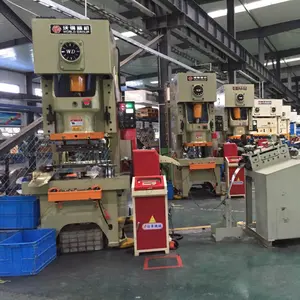
Cangzhou Honglang operates more than 100 sets of stamping and fabrication machinery across a 10,000-square-meter facility. That scale lets us assign the right equipment to each job and avoid the bottlenecks that inflate estimates at smaller shops.
Tooling, Fixtures, and Amortization
Tooling is where low-volume and high-volume estimates diverge the most. For fabrication work, tooling usually means hard dies, soft tooling, bending fixtures, or welding jigs. For very low volumes, suppliers may use universal fixtures and charge only setup time.
A good sheet metal fabrication cost estimator shows tooling as a separate line item. That lets you see how per-unit cost drops as volume rises. For example, a $2,000 tooling charge adds $20 per part at 100 pieces but only $0.20 per part at 10,000 pieces.
Always ask whether tooling is amortized into the piece price or billed separately. Separate billing is usually better for buyers because it makes the true production cost visible.
Finishing, Inspection, Packaging, and Logistics
Finishing protects the part and improves appearance. Common options include powder coating, zinc plating, passivation, anodizing, and silk-screening. Each adds cost based on part size, quantity, and required durability.
Inspection is another often underestimated line item. Basic dimensional checks are quick, but first article inspection, CMM reporting, and material certificates add time. Packaging and logistics depend on part size, fragility, and destination.
Engineering Note: A sheet metal fabrication cost estimator that omits finishing, inspection, or shipping will understate your real cost by 15% to 40%. Always confirm what is included before comparing quotes.
How to Estimate Sheet Metal Fabrication Costs Step by Step
If you want to build your own sheet metal fabrication cost estimator for budgeting, follow this practical framework.
Step 1: Define the Part Geometry
Start with a clear drawing or 3D model. Note the overall dimensions, material thickness, bend count, hole count, and any welded or assembled features. The more detail you have, the more accurate your estimate will be.
Step 2: Choose the Material and Gauge
Select the material based on strength, corrosion resistance, weight, and conductivity needs. Estimate material cost by calculating the blank area, adding scrap, and multiplying by the price per kilogram or per square meter for that gauge.
Step 3: Estimate Cutting and Forming Time
For laser cutting, a rule of thumb is 0.5 to 2 minutes per meter of cut length for thin gauge steel. Bending time depends on the number of bends and setup complexity. Add programming time for the first run.
Step 4: Add Welding and Secondary Operations
Count weld lengths, hardware inserts, machining features, and assembly steps. Each adds labor and fixture time. Small parts with many operations can cost more than larger simple parts.
Step 5: Include Finishing and Logistics
Select the finish and estimate cost based on part surface area. Add packaging, inspection, and freight. If you need material certificates or FAI reports, include those too.
Step 6: Apply Volume Breaks
Divide fixed costs, setup, programming, tooling, across your expected quantity. At low volumes, fixed costs dominate. At high volumes, material and cycle time dominate.
This six-step method gives you a rough but defensible estimate. For a precise number, send your drawing to a supplier with in-house sheet metal parts capabilities.
Sample Cost Estimates by Part Type
The table below shows typical ranges for common custom sheet metal parts. These are planning numbers, not quotes. Your actual cost depends on material, tolerance, finish, and volume.
| Part Type | Material | Low Volume (1–50) | Medium Volume (100–500) | High Volume (1,000+) |
|---|---|---|---|---|
| Simple bracket | Cold-rolled steel | 8–8–25 | 3–3–8 | 1–1–4 |
| Electronics enclosure | Aluminum or steel | 30–30–120 | 15–15–50 | 8–8–25 |
| Chassis with bends | Steel or aluminum | 50–50–200 | 25–25–90 | 12–12–50 |
| Welded assembly | Steel | 40–40–250 | 20–20–120 | 10–10–60 |
| Electrical busbar | Copper | 15–15–60 | 8–8–30 | 4–4–15 |
| HVAC panel | Galvanized steel | 20–20–80 | 10–10–35 | 5–5–18 |
Notice how volume affects price. A bracket that costs $20 at one piece may drop to $3 at 500 pieces and $2 at 5,000 pieces. This is why a sheet metal fabrication cost estimator must ask for quantity before producing a useful number.
Hidden Costs That Throw Off Estimates
Even a detailed sheet metal fabrication cost estimator can miss costs that show up later. Watch for these common gaps.
Setup and Programming Charges
First-time jobs always carry setup cost. Some suppliers bury it in the unit price, which makes low volumes look expensive and high volumes look cheap. Ask for setup and programming as separate line items.
Engineering Change Fees
Design changes after tooling is built can trigger new programming, fixture changes, or sample runs. Suppliers with in-house tooling and programming handle changes faster and at lower cost.
Tight Tolerance Premiums
Tolerances tighter than industry standards require slower cutting, more inspection, and better fixtures. A sheet metal fabrication cost estimator should flag tight tolerances and show how relaxing them affects price.
Rush and Expediting Fees
Short lead times may require overtime, premium material, or air freight. Build realistic lead times into your estimate to avoid expediting charges.
Packaging for Export
If parts ship internationally, packaging must protect them through longer transit and multiple handling steps. Export crates, desiccants, and documentation add cost that domestic estimates often ignore.
Real-world scenario: An automotive buyer named Ravi approved a quote for 1,000 brackets at $4.50 each. The estimate looked complete, but it did not include export packaging or material certificates required by his quality system. When those items were added, the real landed cost rose to $5.80 per piece. Ravi now requires suppliers to confirm packaging, documentation, and logistics in every quote.
Online Estimators vs. Supplier Quotes: What to Trust
Online sheet metal fabrication cost estimators are useful for early budgeting. They let you compare material options and rough price ranges before you contact a supplier. However, they have limits.
Online calculators typically assume:
Standard materials and gauges
Simplified geometry
Average scrap rates
Regional average labor rates
Generic finishing costs
They rarely account for your exact bend radius, hole-to-bend distance, weld distortion risk, or special packaging needs. A supplier quote based on your actual drawing will always be more accurate.
Use online estimators for order-of-magnitude planning. Use supplier quotes for real purchasing decisions. If you need a reliable estimate, request a detailed quote that breaks out material, labor, tooling, finishing, and logistics.
How to Get a More Accurate Quote From Your Supplier
The quality of your estimate depends on the quality of the information you provide. Here is how to help your supplier quote accurately.
Provide a Complete Drawing
Include material grade, gauge, tolerances, surface finish, hardware specifications, and any relevant standards. Missing information forces the supplier to assume, and assumptions usually add cost.
Define Critical Dimensions
Not every dimension needs a tight tolerance. Identify the features that matter for assembly and let the supplier relax non-critical tolerances. This reduces inspection time and cost.
Share Volume Expectations
Quote at multiple quantities if you are unsure. Seeing price at 100, 500, and 2,000 pieces helps you understand the tooling amortization curve and plan inventory.
Ask for a Cost Breakdown
A transparent quote separates material, labor, tooling, finishing, and logistics. That breakdown makes it easier to compare suppliers and identify cost-reduction opportunities.
Request DFM Feedback
The best suppliers review your design and suggest changes that cut cost without sacrificing function. At Cangzhou Honglang, our capabilities include process analysis, tooling design, and production under one roof, so our DFM feedback is grounded in real manufacturing constraints.
FAQ: Common Questions About Sheet Metal Fabrication Cost Estimators
What is a sheet metal fabrication cost estimator?
A sheet metal fabrication cost estimator is a tool or method that predicts the cost to produce a custom sheet metal part. It considers material, labor, equipment time, tooling, finishing, and volume to generate a price range or detailed quote.
How accurate are online sheet metal fabrication cost estimators?
Online estimators are accurate enough for rough budgeting, usually within 20% to 40% of the final quote. They become less accurate for complex geometries, special materials, tight tolerances, or low volumes where setup and tooling dominate cost.
What is the biggest factor in sheet metal fabrication cost?
Material is usually the largest single factor, followed by labor and equipment time. For low volumes, setup and programming can exceed material cost. For high volumes, material and cycle time become the main drivers.
How does volume affect sheet metal fabrication cost?
Higher volume spreads fixed costs like tooling, setup, and programming across more parts. Per-unit cost typically drops 30% to 70% when moving from prototype quantities to production quantities.
Why do suppliers quote different prices for the same drawing?
Different suppliers may assume different material sources, scrap rates, equipment efficiency, finish specifications, and margin structures. They may also include or exclude setup, tooling, inspection, and logistics. Always compare quotes line by line.
Can design changes lower sheet metal fabrication cost?
Yes. Common DFM improvements such as standard bend radii, generous hole-to-bend distances, symmetric layouts, and efficient nesting can reduce material waste, setup time, and rework. Ask your supplier for a DFM review.
Conclusion
A sheet metal fabrication cost estimator is only as good as the assumptions behind it. Whether you use an online calculator or build your own spreadsheet, the most reliable estimate comes from understanding the five cost drivers: material, labor, equipment time, tooling, and finishing.
Start by defining your part clearly. Choose the right material and gauge. Estimate cutting, forming, welding, and finishing time. Add setup, tooling, inspection, and logistics. Then apply volume breaks to see how per-unit cost changes.
When you are ready to move from estimate to quote, work with a supplier that breaks out every cost line and offers DFM feedback. That transparency protects your budget and helps you make better sourcing decisions.
If you are budgeting a custom sheet metal project, Cangzhou Honglang would welcome the opportunity to review your drawing and provide a detailed quote. Our team can also offer a free DFM review to help you optimize your design for cost and manufacturability before production begins.
Ready to start? Request a quote or download our capabilities overview to learn more about our sheet metal fabrication, stamping components, welded assemblies, and mechanical processing services.
Recently Posted
-
Metal Stamping Design Guidelines: 7 Rules for Better Parts
August 4, 2026Good metal stamping design guidelines start with matching the part geometry to the right process, material, and tolerance expectat Read More
 -
Stamped Electrical Terminals: A Complete Guide to Materials, Tolerances, and Sourcing
August 4, 2026Stamped electrical terminals are precision-formed metal components that create reliable electrical connections in automotive, elec Read More
 -
Electrical Hardware Stamping Components: A Buyer’s Guide
August 3, 2026Electrical hardware stamping components are precision metal parts made from sheet metal or strip material. They include terminals,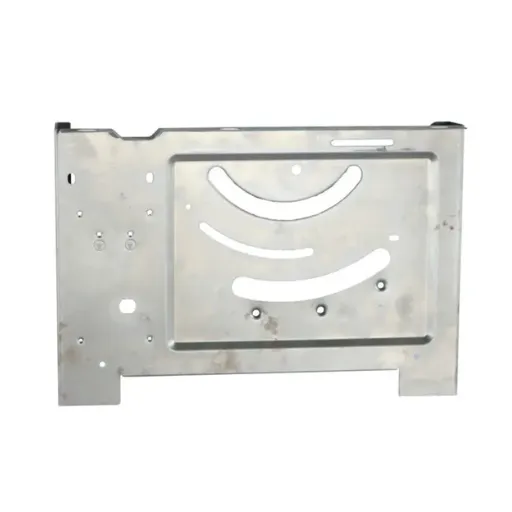 Read More
 -
Sheet Metal Prototyping Services: A Complete Guide for Product Development
August 3, 2026Sheet metal prototyping services help engineers and product teams validate designs, test fit and function, and refine manufacturin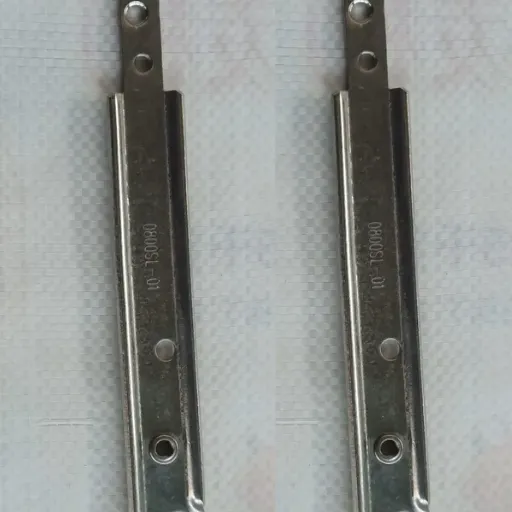 Read More

Contact Us
Recommended Products
-
 Custom Sheet Metal Fabrication: Laser Cutting, Stamping, Bending & Assembly ServicesNegotiableMOQ: 1 Piece
 -
Custom Precision Stainless Steel Metal Stamping Parts for OEM ApplicationsNegotiableMOQ: 1 Piece
-
Custom Automotive Metal Stamping – Stator Rotor Contact Clips for ElectronicsNegotiableMOQ: 1 Piece
-
High-Strength Sheet Metal Stamping for Motorcycle and Automotive ApplicationsNegotiableMOQ: 1 Piece
-
Galvanized Steel Custom Metal Deep Drawing Components Outdoor Deep Drawn Equipment Protective HousingNegotiableMOQ: 1 Piece
-
Professional Sheet Metal Stamping Process Service for Aluminum or Stainless SteelNegotiableMOQ: 1 Piece
-
Customized Stamping Parts for Furniture Auto Electrical Spring ContactsNegotiableMOQ: 1 Piece
-
Precision Custom Metal Deep Drawing Components Custom Sheet Metal Forming Fabrication ServiceNegotiableMOQ: 1 Piece
-
Custom Precision Deep Drawing Stamping Metal Components for IndustryNegotiableMOQ: 1 Piece
-
Stainless Steel Metal Stamping Components - Punching, Bending, Welding ServicesNegotiableMOQ: 1 Piece
-
Custom Deep Drawing Metal Stamping Components for Factory Construction MachineryNegotiableMOQ: 1 Piece
-
Ra0.4 Surface Roughness Metal Stamping Parts for Automotive Brackets PrecisionNegotiableMOQ: 1 Piece
-
Custom Stamping Parts Stamped Welded Deep Drawn Sheet Metal Fabrication ComponentsNegotiableMOQ: 1 Piece
-
Custom Stainless Steel Flat Leaf Spring – Metal Stamping PartsNegotiableMOQ: 1 Piece
-
Custom Sheet Metal Stamping Parts With Bending, Laser Cutting & Fabrication ServicesNegotiableMOQ: 1 Piece
-
Custom CNC Machined Sheet Metal Stamping, Bending, Welding, Laser Cutting & EDM Fabrication ServicesNegotiableMOQ: 1 Piece
-
Custom Precision Metal Stamping Parts High Tolerance Sheet Metal ComponentsNegotiableMOQ: 1 Piece
-
Custom Titanium Sheet Metal Stamping Parts Fabrication for Industrial UseNegotiableMOQ: 1 Piece
-
Durable Custom Metal Deep Drawing Components Surface Treated Forming Components for Construction Engineering EquipmentNegotiableMOQ: 1 Piece
-
China Manufacturer Custom Metal Deep Drawing Components Custom Sheet Metal Deep Drawing FabricationNegotiableMOQ: 1 Piece