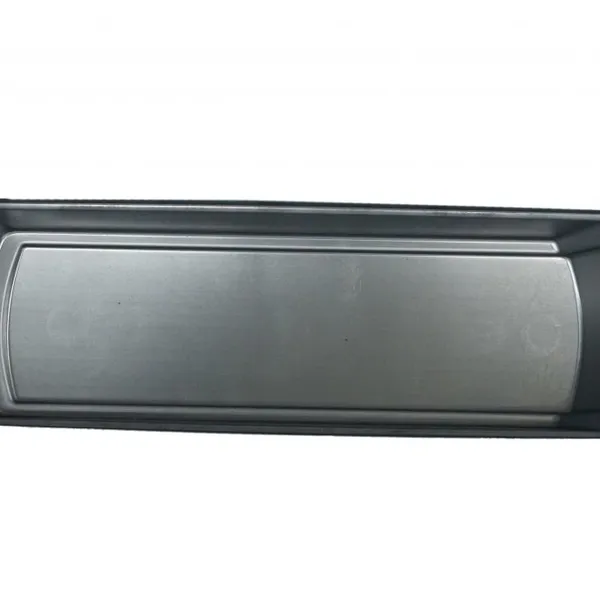
Business License
Sheet Metal Parts for HVAC: Design, Materials, and Sourcing Guide
Sheet metal parts for HVAC include ducts, brackets, dampers, housings, and louvers formed from galvanized steel, aluminum, or stainless steel. Cangzhou Honglang manufactures these components through cutting, bending, stamping, welding, and finishing for heating, ventilation, and air conditioning OEMs worldwide.
What if a single design change could cut your tooling cost by 30% and eliminate field corrosion complaints? Most HVAC buyers already know that the right sheet metal parts keep assemblies square, airflow smooth, and service calls low. This guide will show you how to specify materials, design for manufacturability, and choose a supplier that scales with your program. We will cover common parts, material trade-offs, forming processes, design rules, quality checkpoints, and supplier selection criteria.
Key Takeaways
Galvanized steel, aluminum, and stainless steel cover the majority of HVAC sheet metal applications; material choice depends on corrosion exposure, weight, and conductivity.
Ducts, dampers, brackets, housings, and louvers each serve airflow, structural, or environmental control functions.
Brake press bending, stamping, laser cutting, and welding are the core processes; finishing protects parts against moisture and salt.
Bend radius, hole spacing, and tolerance definition early in design reduce tooling cost and scrap.
A reliable HVAC sheet metal supplier combines in-house tooling, scalable capacity, and clear engineering communication.
Need custom HVAC sheet metal parts? Request a free DFM review and our engineering team will review your drawing within 24 hours.
Why HVAC Systems Rely on Sheet Metal Parts
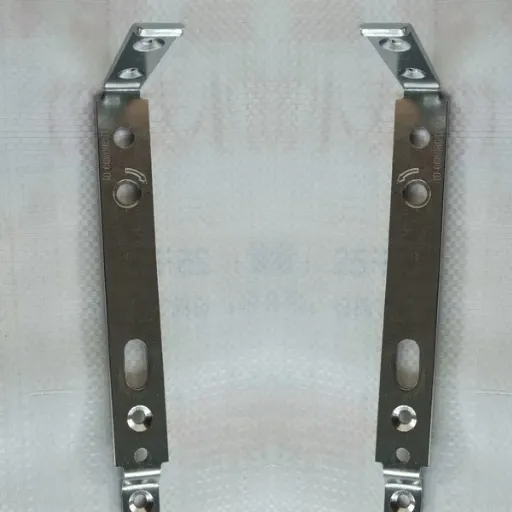
HVAC equipment operates in demanding conditions. Parts must survive temperature swings, vibration, moisture, and in some cases salt spray. Sheet metal offers an unusual mix of strength, light weight, and formability, which is why it appears in nearly every HVAC assembly.
Ductwork moves conditioned air through buildings. Brackets and frames hold compressors, coils, and fans in place. Housings protect motors and electronics from dust and moisture. Louvers and dampers control airflow direction and volume. Each part must fit precisely so the system meets efficiency and noise targets.
Metal-forming processes also support high production rates. Once a die or brake press setup is proven, a supplier can produce thousands of identical parts per shift. That repeatability matters when you are feeding an assembly line that cannot afford downtime.
Common HVAC Sheet Metal Parts and Their Functions
HVAC sheet metal parts fall into three groups: airflow components, structural hardware, and protective enclosures. Understanding each group helps you match the right process and material to the job.
Airflow components
Duct sections, elbows, and transitions distribute heated or cooled air.
Dampers adjust or shut off airflow inside ducts.
Louvers allow air intake or exhaust while blocking rain and debris.
Grilles and diffusers spread air evenly into rooms.
Structural hardware
Mounting brackets attach compressors, coils, and fans to frames.
Frames and supports keep assemblies rigid during shipping and operation.
Channel and angle sections provide load-bearing connections.
Protective enclosures
Motor housings shield rotating equipment from dust and moisture.
Control boxes protect electrical components.
Drain pans collect condensate and direct it away from sensitive areas.
For a visual walkthrough of how these parts are formed, watch this HVAC sheet metal fabrication process overview. Replace the link with your own video once it is available.
Many of these parts start as flat blanks on coil or sheet stock. A combination of blanking, piercing, bending, and welding turns the blank into a finished component. You can see the full range in our sheet metal parts capabilities.
Material Selection for HVAC Sheet Metal Parts
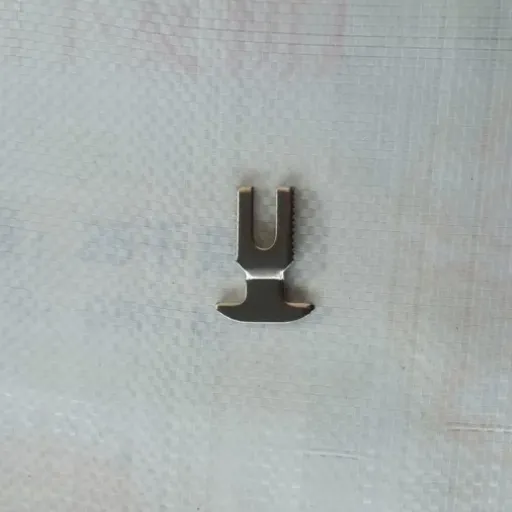
Material choice drives cost, corrosion resistance, weight, and conductivity. The wrong material leads to field failures. The right material extends service life and simplifies assembly.
| Material | Common Grades | Typical HVAC Applications | Key Properties |
|---|---|---|---|
| Galvanized steel | SGCC, DX51D, G90/Z275 | Ductwork, brackets, outdoor housings, drain pans | Low cost, good corrosion resistance from zinc coating, easy to paint or powder coat |
| Aluminum | 5052, 6061, 1100 | Lightweight panels, heat exchanger fins, louvers | Light weight, corrosion resistant, good thermal conductivity |
| Stainless steel | 304, 316, 430 | Coastal or corrosive environments, kitchen ventilation, medical HVAC | High corrosion resistance, durable, higher material and tooling cost |
| Copper | C11000, C10200 | Refrigeration tubing connections, electrical grounding straps | Excellent conductivity, soft, easy to form, antimicrobial |
| Cold-rolled steel | SPCC, DC01 | Indoor brackets, frames, painted housings | Good strength, smooth surface, requires coating for corrosion protection |
Mini-story: The coastal bracket that stopped rusting
Mike Torres, a procurement manager for a Florida HVAC OEM, noticed that mounting brackets on coastal rooftop units were rusting within 18 months. His previous supplier used an unclear zinc coating and no passivation. After switching to Cangzhou Honglang, the engineering team reviewed the end-use environment and recommended 304 stainless steel with a passivated finish for those units. Field returns dropped from 12 per month to fewer than two within 24 months. The material change added unit cost, but the warranty savings more than paid for it.
Coating and finishing deserve as much attention as base material. Common finishes for HVAC sheet metal parts include:
Galvanizing: Zinc layer protects steel in outdoor and humid environments.
Powder coating: Provides color, insulation, and extra moisture protection.
Passivation: Removes surface contaminants from stainless steel and improves corrosion resistance.
Anodizing: Hardens aluminum and adds a wear-resistant surface.
For duct construction standards, SMACNA publishes widely referenced guidelines on gauge selection, reinforcement, and sealing. You can explore those resources at SMACNA.
Manufacturing Processes for HVAC Sheet Metal Parts
Most HVAC sheet metal parts pass through a sequence of cutting, forming, joining, and finishing operations. The best sequence depends on volume, part geometry, and tolerance requirements.
Cutting and Blanking
Shearing, laser cutting, and plasma cutting separate blanks from sheet or coil. Blanking dies produce the cleanest edges and the fastest cycle times for high volumes. Laser cutting offers flexibility for prototypes and low volumes where tooling is not yet justified.
Bending and Forming
Brake presses form straight bends, flanges, and channels. Roll forming creates long profiles with consistent cross-sections. Stamping dies add pierced holes, embossments, and complex contours in a single press stroke. Each method has its own tooling cost and speed trade-off.
Stamping
Stamping is ideal for repetitive features such as mounting holes, louvers, and connector slots. Progressive die stamping can produce complex brackets in a single high-speed pass, lowering per-part cost at volume. Learn more about our stamping and forming capabilities.
Welding and Assembly
Spot welding joins brackets to frames. MIG or TIG welding seals duct seams and builds housings. Projection welding attaches studs or nuts for assembly. Secondary operations such as riveting, tapping, and hardware insertion turn individual parts into ready-to-install assemblies.
Finishing
Finishing protects parts and prepares them for paint or assembly. Processes include degreasing, phosphating, galvanizing, powder coating, and passivation. The right finish depends on the end-use environment and any regulatory requirements such as RoHS or REACH.
For a broader introduction to sheet metal fabrication, The Fabricator offers practical overviews of cutting, bending, and forming. Visit The Fabricator for reference material.
Design Considerations for Reliable HVAC Sheet Metal Parts
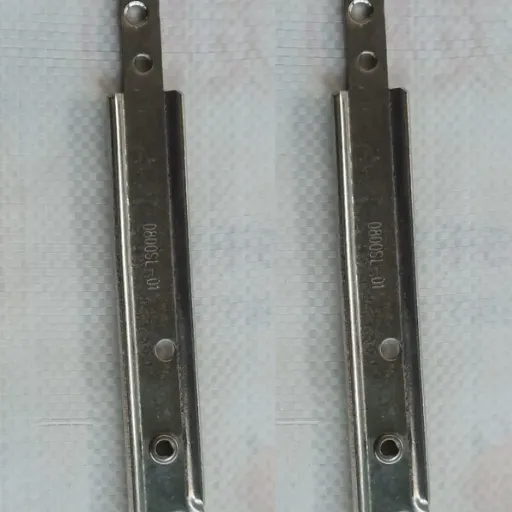
Good design reduces tooling cost, shortens lead time, and improves part quality. These guidelines reflect what our engineers share with customers during DFM reviews.
Bend Radius
A bend radius that is too small can crack the material, especially in galvanized steel or stainless steel. As a starting point, the inside bend radius should be at least equal to material thickness for most steels. Aluminum and stainless steel usually need a larger radius. Bending perpendicular to the rolling grain also reduces the risk of cracking.
Hole Size and Spacing
Holes should be at least 1.5 times material thickness in diameter. Hole-to-edge and hole-to-hole spacing should be at least twice material thickness. This prevents distortion during punching and maintains strength around the feature.
Tolerance Definition
Commercial sheet metal tolerances typically range from +/- 0.1 mm to +/- 0.25 mm for stamped features. Looser tolerances on non-critical dimensions reduce inspection cost and scrap. Define tight tolerances only where they affect assembly or airflow.
Assembly Features
Design in alignment slots, pilot holes, and self-locating bends. These features speed assembly and reduce the need for fixtures. Consistent part geometry also makes automated assembly easier as volumes grow.
Thermal and Acoustic Considerations
HVAC parts expand and contract with temperature. Leave clearance around through-holes and allow for thermal movement in long duct runs. Add stiffening beads or insulation standoffs where vibration or noise is a concern.
Mini-story: The bracket that cracked at validation
Sarah Chen, a design engineer at a Midwest OEM, specified a 0.5 mm inside bend radius on a 1.5 mm galvanized steel duct bracket. First samples showed micro-cracks along the bend line. During a DFM review, Cangzhou Honglang recommended increasing the radius to 2 mm and bending perpendicular to the grain direction. The revised part passed validation on the first retry, and the die lasted three times longer than the original design would have allowed. A 15-minute design review saved weeks of rework.
Quality and Durability Requirements
HVAC parts must perform for years without rework. A strong quality system covers material, tooling, process control, and outgoing inspection.
Material Certificates and Traceability
For regulated or high-volume programs, suppliers should retain material certificates and track coil lots. This traceability supports warranty claims, recall management, and customer audits.
Dimensional Inspection
In-process checks catch drift before it becomes scrap. Common tools include calipers, height gauges, go/no-go fixtures, and coordinate measuring machines for complex geometries. First-article inspection confirms that the setup matches the drawing before full production begins.
Leak and Pressure Testing
Ducts, housings, and drain pans may require leak testing or pressure testing. Test methods include bubble testing, dye penetrant inspection, and air decay testing. Define acceptance criteria in the drawing so the supplier can build the right fixture.
Corrosion and Environmental Testing
Outdoor and coastal parts may need salt spray testing, humidity cycling, or UV exposure testing. These tests validate that coatings and materials meet the specified service life. Our quality and inspection processes include dimensional, visual, and functional checks tailored to HVAC requirements.
Process Capability
Process capability indices such as Cpk measure how consistently a process produces within tolerance. A Cpk of 1.33 or higher indicates a capable process. Tracking Cpk over time helps catch wear or material variation before it affects the assembly line.
Mini-story: The program that stopped missing delivery dates
A commercial HVAC OEM in the Midwest needed 500,000 mounting brackets per year for a rooftop unit line. Their previous supplier delivered late on three consecutive quarters, and lot-to-lot variation slowed final assembly. Cangzhou Honglang built a progressive die with in-line pneumatic gauging and reserved dedicated press capacity. Over 12 months, the Cpk stayed above 1.33 and on-time delivery reached 98%. Stable tooling turned a sourcing headache into a predictable supply line.
Choosing a Supplier for HVAC Sheet Metal Parts
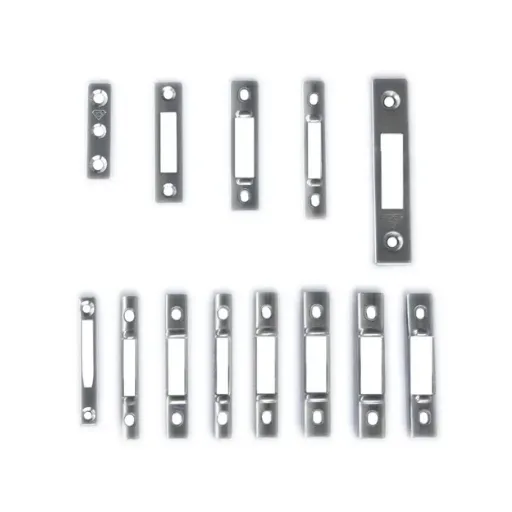
The right supplier does more than quote a unit price. They reduce total cost of ownership, protect your schedule, and help you solve design problems before production begins.
In-House Tooling Capability
Suppliers that design and build dies in-house control lead time, quality, and confidentiality. They can also modify tooling quickly when design changes arise. Our mold design and manufacturing team handles tooling from concept to production under one roof.
Equipment and Capacity
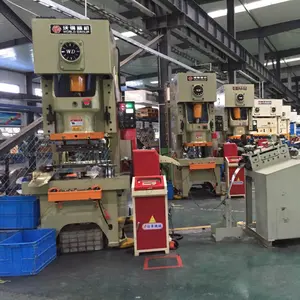
Ask about press tonnage, bed size, brake press length, laser cutting capacity, and welding equipment. A facility with 100+ stamping machines and 4,000 square meters of production area can support both prototype runs and high-volume programs. Capacity reservations become important when demand spikes during seasonal peaks.
Industry Experience
Suppliers with HVAC experience already understand duct construction standards, thermal requirements, and corrosion expectations. Cangzhou Honglang supplies automotive, electronics, HVAC, furniture machinery, wind power, power supply, and telecommunications customers, with nearly 1,000 product varieties in our experience base. Visit our HVAC components page to see application-specific capabilities.
Engineering Communication
Look for a supplier that assigns a technical contact, responds to drawing changes, and provides DFM feedback before tooling begins. Direct engineering access prevents misunderstandings and keeps your program on schedule.
Export and Logistics Experience
For global supply chains, consider export documentation, packaging standards, and shipping reliability. A supplier that already ships to large enterprises worldwide is more likely to handle customs, labeling, and delivery without surprises.
Frequently Asked Questions
What are the most common sheet metal parts for HVAC?
The most common parts include duct sections, elbows, dampers, louvers, grilles, mounting brackets, motor housings, control boxes, and drain pans. Each part serves airflow, structural, or protective functions.
Which material is best for outdoor HVAC sheet metal parts?
Galvanized steel is the most common choice for outdoor parts due to its low cost and zinc corrosion protection. In coastal or corrosive environments, 304 or 316 stainless steel often provides longer service life. Aluminum works well when weight reduction matters.
What is the difference between stamping and fabrication for HVAC parts?
Stamping uses dedicated dies to form parts quickly and repeatably at medium-to-high volumes. Fabrication uses brake presses, lasers, and welders without hard tooling, making it more flexible for prototypes and low volumes. Many programs start with fabrication and transition to stamping as volumes grow.
How do you prevent corrosion on HVAC sheet metal parts?
Choose the right base material for the environment, apply protective coatings such as galvanizing or powder coating, and design drainage paths so moisture does not collect. Passivation and proper storage also reduce corrosion risk.
What tolerances can HVAC sheet metal parts hold?
Commercial sheet metal tolerances typically range from +/- 0.1 mm to +/- 0.25 mm depending on part size, material, and tooling. Tighter tolerances require precision tooling and more frequent inspection.
How do I choose an HVAC sheet metal supplier?
Look for in-house tooling capability, sufficient equipment and capacity, HVAC industry experience, transparent quality systems, direct engineering communication, and export logistics experience. Request samples and inspection reports before committing to mass production.
Conclusion
HVAC sheet metal parts may seem simple, but their performance depends on careful material selection, manufacturable design, and a supplier that controls quality from tooling through finishing. The right choices reduce warranty claims, keep assembly lines moving, and protect your brand reputation in the field.
If you are sourcing custom HVAC sheet metal parts, focus on these priorities: match the material and finish to the environment, define tolerances only where they matter, and choose a supplier with in-house tooling and scalable capacity.
Cangzhou Honglang operates more than 100 sets of stamping and forming machinery across a 10,000-square-meter facility, with 20 technical professionals supporting mold design, production, and quality. We produce HVAC sheet metal parts, sheet metal components, welded assemblies, and mechanical processing parts for customers worldwide.
Ready to start your next project? Request a quote and send us your drawing. Our engineering team will review your design and provide a free DFM assessment to help you optimize for quality, cost, and lead time.
Recently Posted
-
Metal Stamping Design Guidelines: 7 Rules for Better Parts
August 4, 2026Good metal stamping design guidelines start with matching the part geometry to the right process, material, and tolerance expectat Read More
 -
Stamped Electrical Terminals: A Complete Guide to Materials, Tolerances, and Sourcing
August 4, 2026Stamped electrical terminals are precision-formed metal components that create reliable electrical connections in automotive, elec Read More
 -
Electrical Hardware Stamping Components: A Buyer’s Guide
August 3, 2026Electrical hardware stamping components are precision metal parts made from sheet metal or strip material. They include terminals, Read More
 -
Sheet Metal Prototyping Services: A Complete Guide for Product Development
August 3, 2026Sheet metal prototyping services help engineers and product teams validate designs, test fit and function, and refine manufacturin Read More

Contact Us
Recommended Products
-
 Custom Sheet Metal Fabrication: Laser Cutting, Stamping, Bending & Assembly ServicesNegotiableMOQ: 1 Piece
 -
Custom Precision Stainless Steel Metal Stamping Parts for OEM ApplicationsNegotiableMOQ: 1 Piece
-
Custom Automotive Metal Stamping – Stator Rotor Contact Clips for ElectronicsNegotiableMOQ: 1 Piece
-
High-Strength Sheet Metal Stamping for Motorcycle and Automotive ApplicationsNegotiableMOQ: 1 Piece
-
Galvanized Steel Custom Metal Deep Drawing Components Outdoor Deep Drawn Equipment Protective HousingNegotiableMOQ: 1 Piece
-
Professional Sheet Metal Stamping Process Service for Aluminum or Stainless SteelNegotiableMOQ: 1 Piece
-
Customized Stamping Parts for Furniture Auto Electrical Spring ContactsNegotiableMOQ: 1 Piece
-
Precision Custom Metal Deep Drawing Components Custom Sheet Metal Forming Fabrication ServiceNegotiableMOQ: 1 Piece
-
Custom Precision Deep Drawing Stamping Metal Components for IndustryNegotiableMOQ: 1 Piece
-
Stainless Steel Metal Stamping Components - Punching, Bending, Welding ServicesNegotiableMOQ: 1 Piece
-
Custom Deep Drawing Metal Stamping Components for Factory Construction MachineryNegotiableMOQ: 1 Piece
-
Ra0.4 Surface Roughness Metal Stamping Parts for Automotive Brackets PrecisionNegotiableMOQ: 1 Piece
-
Custom Stamping Parts Stamped Welded Deep Drawn Sheet Metal Fabrication ComponentsNegotiableMOQ: 1 Piece
-
Custom Stainless Steel Flat Leaf Spring – Metal Stamping PartsNegotiableMOQ: 1 Piece
-
Custom Sheet Metal Stamping Parts With Bending, Laser Cutting & Fabrication ServicesNegotiableMOQ: 1 Piece
-
Custom CNC Machined Sheet Metal Stamping, Bending, Welding, Laser Cutting & EDM Fabrication ServicesNegotiableMOQ: 1 Piece
-
Custom Precision Metal Stamping Parts High Tolerance Sheet Metal ComponentsNegotiableMOQ: 1 Piece
-
Custom Titanium Sheet Metal Stamping Parts Fabrication for Industrial UseNegotiableMOQ: 1 Piece
-
Durable Custom Metal Deep Drawing Components Surface Treated Forming Components for Construction Engineering EquipmentNegotiableMOQ: 1 Piece
-
China Manufacturer Custom Metal Deep Drawing Components Custom Sheet Metal Deep Drawing FabricationNegotiableMOQ: 1 Piece